In 2026, Insulated Gate Bipolar Transistors (IGBTs) continue to play a major role in power electronics, industrial automation, renewable energy systems, and electric vehicles. Although newer semiconductor technologies such as Silicon Carbide (SiC) and Gallium Nitride (GaN) are growing rapidly, IGBTs remain one of the most cost-effective and reliable solutions for medium- and high-power switching applications.
This guide by Simplytronix explains what an IGBT is, how it works, its internal structure, advantages, applications, and why IGBT technology remains highly relevant in modern industrial and automotive electronics.
What is an IGBT?
IGBT stands for Insulated Gate Bipolar Transistor. It is a three-terminal power semiconductor device designed for high-efficiency switching and power control applications.
An IGBT combines two important semiconductor technologies:
- The voltage-controlled gate structure of a MOSFET
- The high-current capability of a Bipolar Junction Transistor (BJT)
This hybrid design allows IGBTs to provide efficient switching performance while handling very high voltages and currents.
Main Functions of an IGBT
| Function | Description |
|---|---|
| Power Switching | Turns high-power electrical loads ON and OFF efficiently |
| Motor Control | Controls industrial motors and EV traction systems |
| Voltage Regulation | Maintains stable power delivery in converters and inverters |
| Energy Conversion | Used in solar, wind, and industrial power systems |
| Frequency Conversion | Converts AC frequency in VFD and inverter applications |
Basic Structure of an IGBT
An IGBT has three primary terminals:
| Terminal | Function |
|---|---|
| Gate (G) | Controls switching operation |
| Collector (C) | Input current terminal |
| Emitter (E) | Output current terminal |
The gate terminal requires very little input current, making IGBTs easy to control using microcontrollers, DSPs, and industrial control systems.
How Does an IGBT Work?
An IGBT acts as an electronically controlled switch.
When positive voltage is applied to the gate terminal:
- The device turns ON
- Current flows between collector and emitter
- The connected load receives power
When the gate voltage is removed:
- The device turns OFF
- Current flow stops
- Power delivery to the load is interrupted
This switching process occurs extremely fast, allowing efficient power conversion with minimal energy loss.
Why IGBTs Are Important in 2026
IGBTs continue to dominate many industrial applications because they provide an excellent balance between performance, reliability, and cost.
| Advantage | Benefit |
|---|---|
| High Voltage Capability | Handles several hundred to thousands of volts |
| High Current Capacity | Suitable for industrial power systems |
| Efficient Switching | Reduces energy loss and heat generation |
| Low Gate Power Requirement | Easy to drive using control circuits |
| Strong Reliability | Performs well in harsh industrial environments |
| Cost Effective | More economical than newer wide-bandgap technologies in many applications |
IGBT vs MOSFET
Both IGBTs and MOSFETs are widely used in power electronics, but each technology is optimized for different applications.
| Feature | IGBT | MOSFET |
|---|---|---|
| Best Voltage Range | Medium to very high voltage | Low to medium voltage |
| Switching Speed | Moderate | Very fast |
| Power Handling | Excellent for high power | Better for lower power systems |
| Conduction Losses | Lower at high voltage | Lower at low voltage |
| Applications | Industrial drives, EVs, railways | SMPS, DC converters, consumer electronics |
Applications of IGBTs in Modern Electronics
1. Electric Vehicles (EVs)
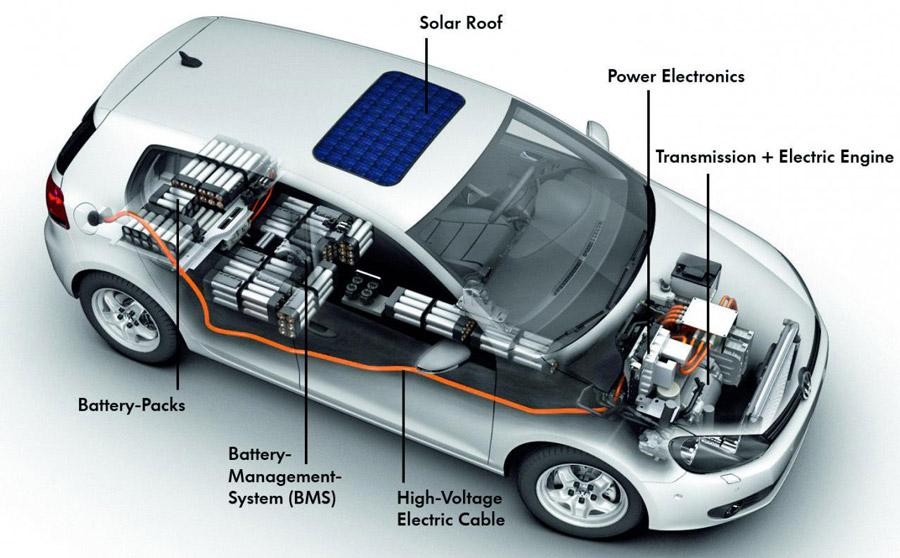
IGBTs are heavily used in electric vehicle power systems.
| EV System | Role of IGBT |
|---|---|
| Traction Inverter | Controls motor power delivery |
| Charging Systems | Efficient power conversion during charging |
| Battery Management | Controls energy flow and protection |
| Auxiliary Systems | Supports HVAC and onboard electronics |
Many hybrid and electric vehicles still rely on advanced IGBT modules because of their proven reliability and cost efficiency.
2. Industrial Automation
Industrial automation systems use IGBTs for high-power motor control and energy-efficient operation.
| Industrial Application | IGBT Function |
|---|---|
| Variable Frequency Drives (VFDs) | Controls motor speed and torque |
| Robotics | Provides precise motor control |
| CNC Machines | Supports high-precision automation |
| Industrial Pumps | Improves power efficiency |
3. Renewable Energy Systems
Renewable energy systems require efficient power conversion technologies, making IGBTs extremely important.
| Renewable System | Purpose of IGBT |
|---|---|
| Solar Inverters | Converts DC to AC power |
| Wind Turbines | Controls generated electrical energy |
| Energy Storage Systems | Manages battery charging and discharge |
| Grid Systems | Maintains efficient power transfer |
Common IGBT Package Types
| Package Type | Typical Use |
|---|---|
| TO-220 | Medium power applications |
| TO-247 | High power industrial circuits |
| IGBT Modules | EVs and industrial drives |
| Press-Pack Modules | Very high-power systems |
Leading IGBT Manufacturers in 2026
| Manufacturer | Known For |
|---|---|
| Infineon Technologies | Automotive and industrial IGBT modules |
| Mitsubishi Electric | Railway and heavy industrial systems |
| Fuji Electric | Industrial automation solutions |
| onsemi | EV and power management semiconductors |
| STMicroelectronics | Power electronics and industrial devices |
| Semikron Danfoss | High-performance power modules |
Challenges Facing IGBT Technology
Despite their popularity, IGBTs face competition from newer technologies.
| Challenge | Impact |
|---|---|
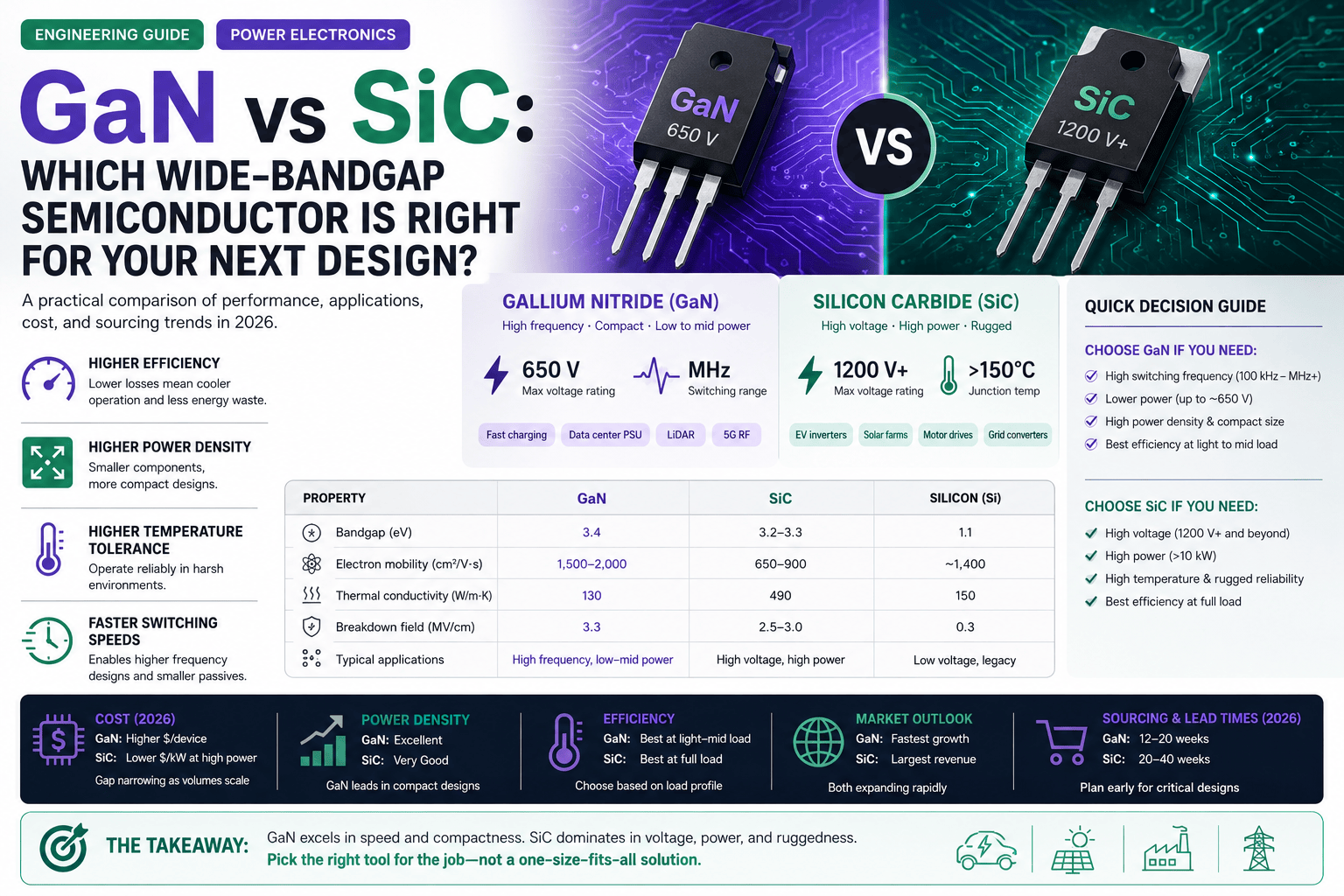
| SiC MOSFET Growth | Higher efficiency in premium EV systems |
| GaN Devices | Faster switching in compact electronics |
| Thermal Management | Requires advanced cooling in high-power systems |
| Switching Losses | Higher than wide-bandgap semiconductors |
However, IGBTs remain dominant in many medium- and high-power applications because of their mature manufacturing ecosystem and lower overall cost.
Future of IGBTs Beyond 2026
Manufacturers continue improving IGBT technology through:
- Lower switching losses
- Improved thermal performance
- Compact module integration
- Higher power density
- Advanced packaging technologies
IGBTs are expected to remain highly relevant in industrial automation, heavy machinery, renewable energy infrastructure, and transportation systems for many years.
Final Thoughts
IGBTs remain one of the most important semiconductor technologies in modern power electronics. Their ability to efficiently handle high voltage and high current makes them essential for industrial automation, renewable energy systems, transportation, electric vehicles, and large-scale power conversion.
As global electrification continues to grow in 2026, demand for reliable and efficient IGBT solutions remains strong across industrial and automotive sectors.
Explore semiconductor components, industrial electronics, and power devices at Simplytronix for your next electronics and automation project.