As power demands continue to rise across industries, traditional silicon-based semiconductors are reaching their limits. Enter Silicon Carbide (SiC), a wide bandgap material that is rapidly gaining adoption in high-voltage and high-temperature applications.
SiC is particularly well-suited for applications requiring high efficiency, durability, and reliability under extreme conditions.
What is Silicon Carbide (SiC)?
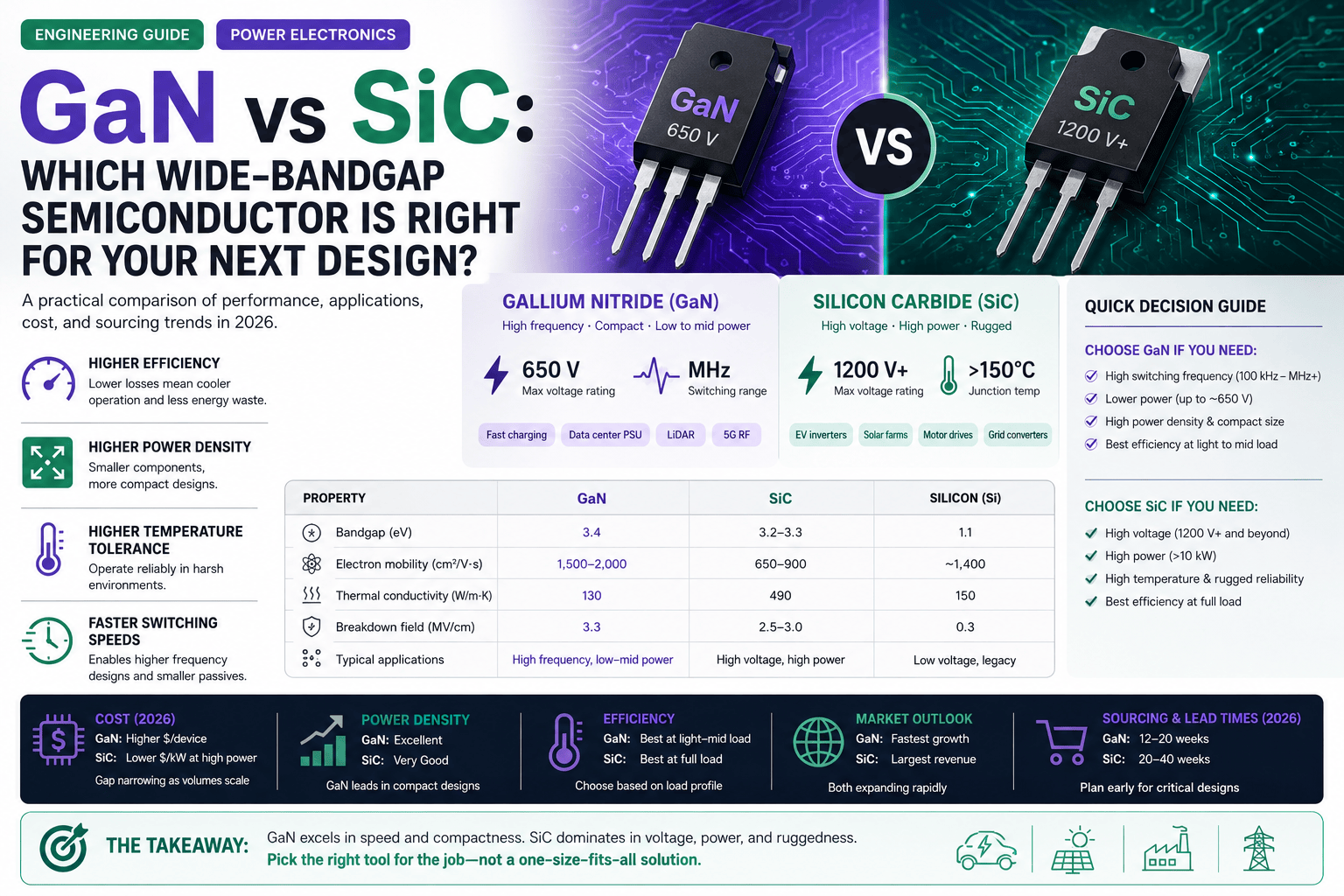
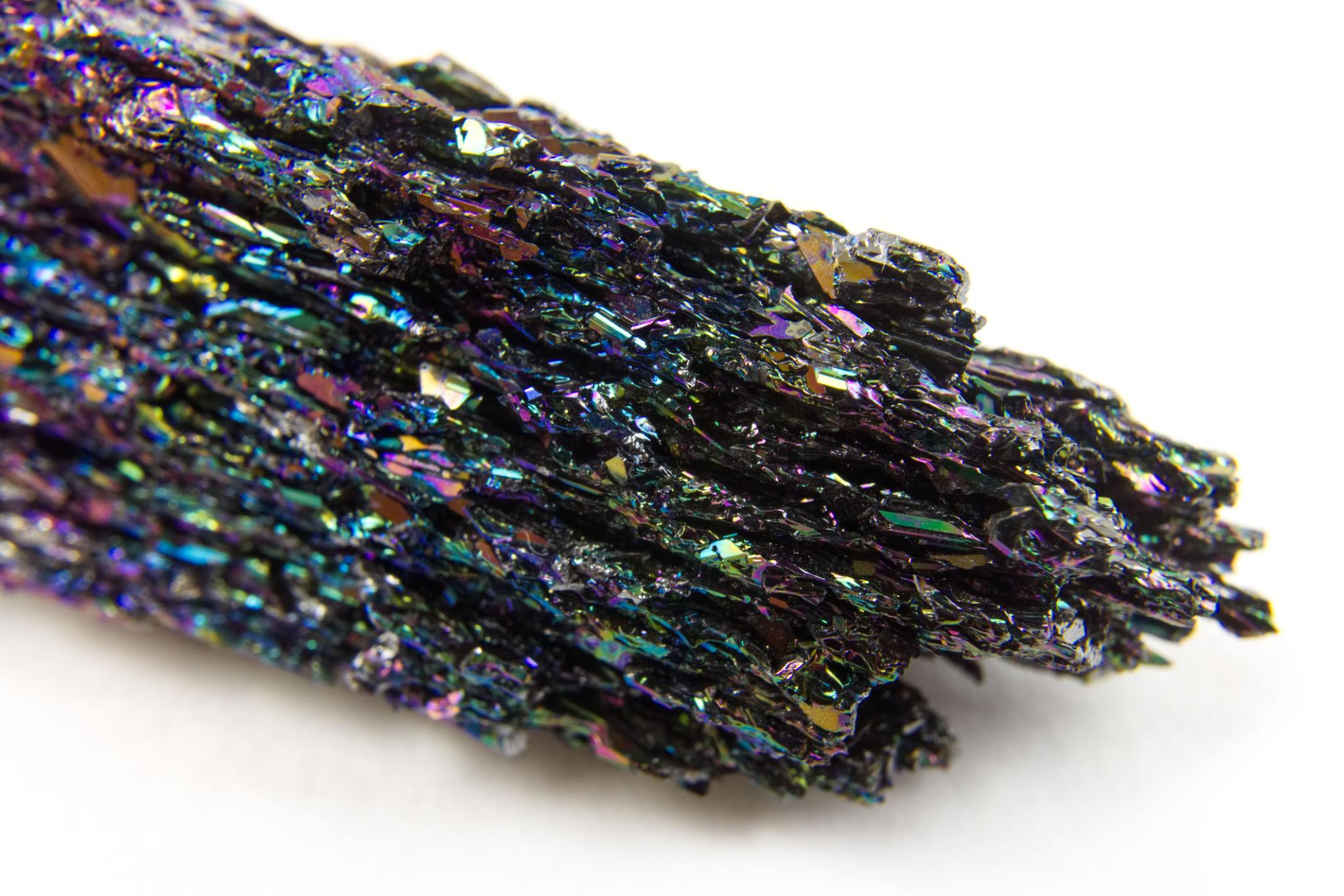
Silicon Carbide is a wide bandgap semiconductor composed of silicon and carbon. It offers significantly higher breakdown voltage, thermal conductivity, and switching efficiency compared to traditional silicon.
These properties make SiC ideal for high-power and high-frequency applications where efficiency and heat management are critical.
Key Advantages of SiC Technology
1. High Voltage Capability
SiC devices can operate at much higher voltages than silicon, making them ideal for power grids, EVs, and industrial equipment.
2. Superior Thermal Performance
With excellent thermal conductivity, SiC devices dissipate heat more efficiently, reducing the need for complex cooling systems.
3. Higher Efficiency
Lower switching and conduction losses result in improved energy efficiency across applications.
4. Increased Reliability
SiC performs well under extreme temperatures and harsh conditions, ensuring longer device lifespan.
Applications of SiC
Electric Vehicles (EVs)
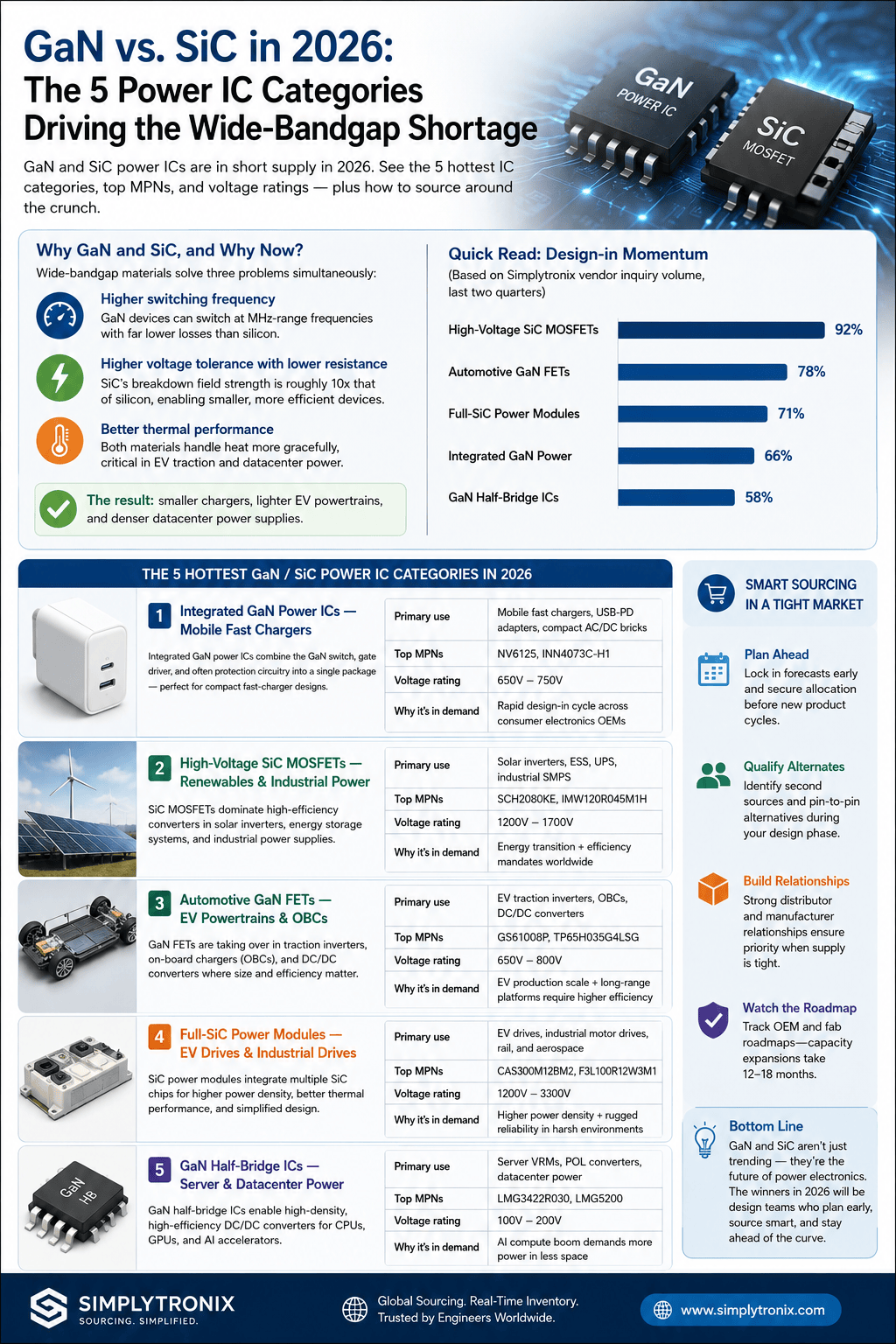
SiC is widely used in EV inverters and charging systems, enabling faster charging and improved energy efficiency.
Renewable Energy
Solar inverters and wind energy systems benefit from SiC's high efficiency and durability.
Industrial Power Systems
SiC enhances performance in motor drives, UPS systems, and high-voltage industrial equipment.
Rail & Aerospace
High reliability and efficiency make SiC ideal for transportation and aerospace power systems.
SiC vs Silicon: A Quick Comparison
| Feature | Silicon | SiC |
|---|---|---|
| Voltage Handling | Moderate | Very High |
| Thermal Conductivity | Lower | Excellent |
| Efficiency | Moderate | High |
| Heat Resistance | Limited | High |
| Cost | Lower | Higher |
Challenges of SiC
- Higher production cost compared to silicon
- Manufacturing complexity
- Limited availability compared to traditional semiconductors
The Future of SiC
As demand for efficient power conversion grows, SiC is expected to play a major role in next-generation technologies, especially in electric mobility and renewable energy systems.
Conclusion
Silicon Carbide is a powerful alternative to traditional silicon, offering unmatched performance in high-voltage and high-temperature environments. Its adoption is accelerating across industries, making it a key technology for the future of power electronics.