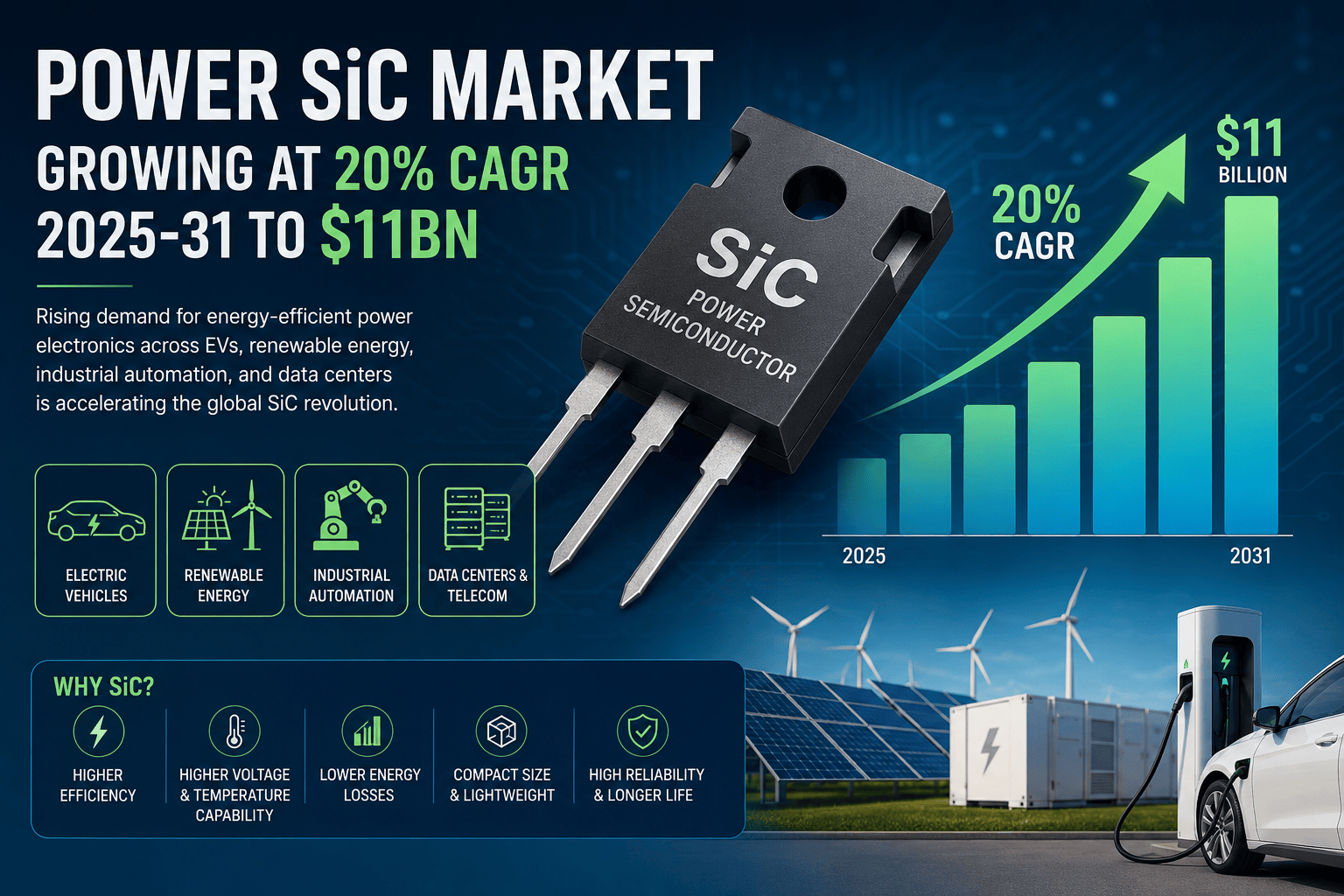
The global semiconductor industry is entering a new era of power electronics innovation, and Silicon Carbide (SiC) technology is at the center of this transformation. Industry analysts project that the global Power Silicon Carbide (SiC) market will expand at a compound annual growth rate (CAGR) of approximately 20% between 2025 and 2031, reaching an estimated value of $11 billion by the end of the forecast period.
This rapid growth is being fueled by the increasing demand for energy-efficient power conversion systems, the global transition toward electric mobility, the expansion of renewable energy infrastructure, and the modernization of industrial power systems. As traditional silicon-based power semiconductors approach their physical limitations, SiC devices are emerging as the preferred solution for high-performance applications that require greater efficiency, higher operating temperatures, and improved power density.
For OEMs, EMS providers, industrial equipment manufacturers, and sourcing professionals, understanding the growth trajectory of the SiC market is becoming increasingly important. Companies that position themselves early in the SiC ecosystem stand to benefit from improved product performance, reduced operating costs, and enhanced competitive advantages.
Understanding Silicon Carbide Technology
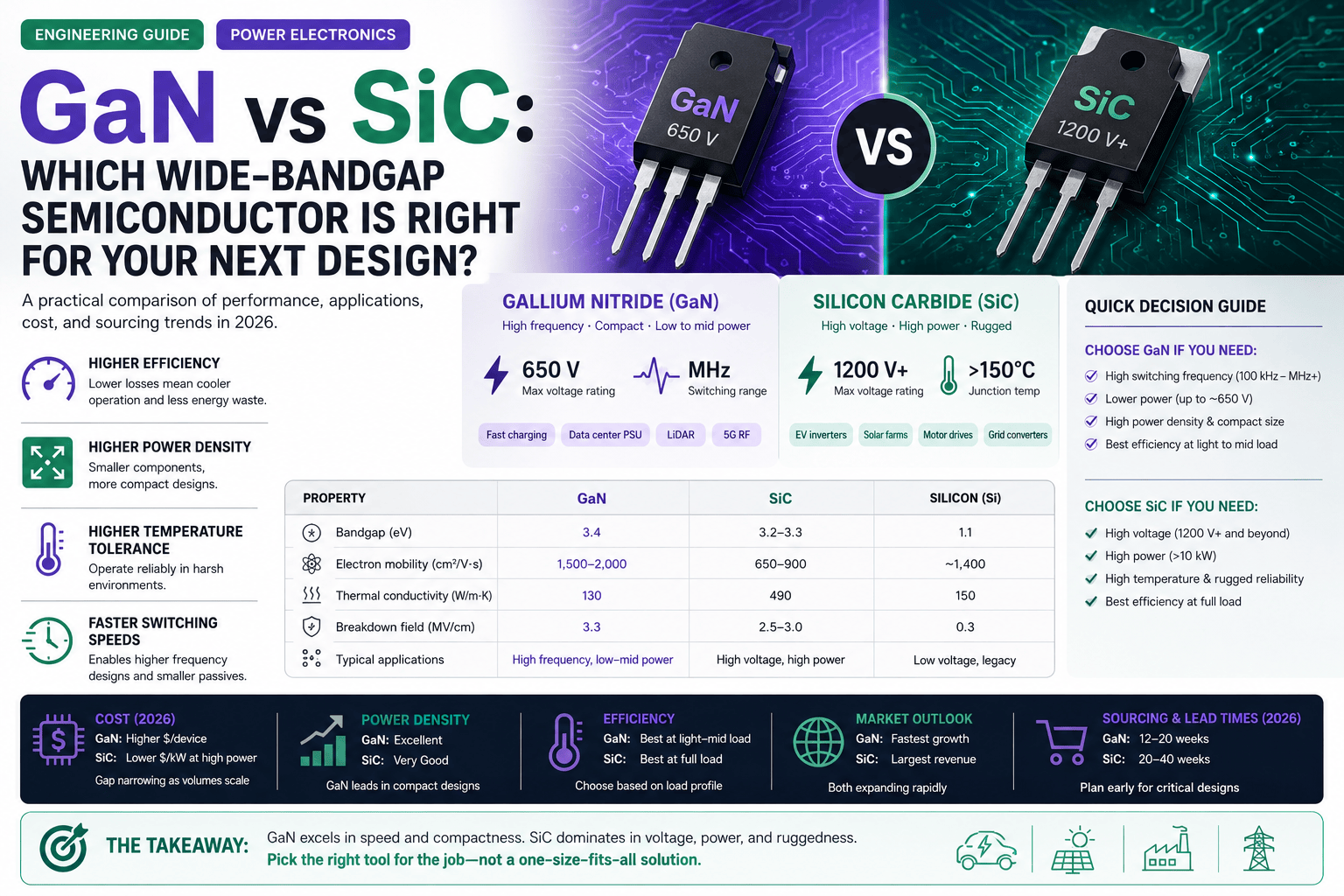
Silicon Carbide is a wide-bandgap semiconductor material that offers significant electrical and thermal advantages over conventional silicon. Unlike traditional silicon devices, SiC semiconductors can operate at higher voltages, higher temperatures, and faster switching frequencies while maintaining lower power losses.
The unique properties of Silicon Carbide allow engineers to design more efficient power systems with fewer cooling requirements and smaller overall footprints. This makes SiC particularly attractive in industries where energy efficiency, weight reduction, and reliability are critical.
Key characteristics of SiC semiconductors include:
- Higher breakdown voltage capability
- Lower switching losses
- Improved thermal conductivity
- Higher operating temperature tolerance
- Reduced cooling requirements
- Greater power density
- Improved system efficiency
- Smaller passive component requirements
These advantages translate directly into lower energy consumption, improved performance, and reduced total cost of ownership for end users.
Why the Market is Growing So Rapidly
The projected 20% CAGR of the Power SiC market is not driven by a single industry. Instead, it is the result of simultaneous adoption across several major sectors including electric vehicles, renewable energy, industrial automation, aerospace, telecommunications, and power infrastructure.
As governments worldwide continue to implement stricter energy-efficiency regulations and carbon-reduction targets, manufacturers are increasingly adopting technologies that help reduce energy losses and improve system performance.
Silicon Carbide has become one of the most promising solutions for achieving these objectives.
Electric Vehicles: The Largest Growth Driver
The electric vehicle industry represents the most significant opportunity for SiC semiconductor manufacturers. Modern EV platforms require highly efficient power conversion systems to maximize battery utilization and vehicle range.
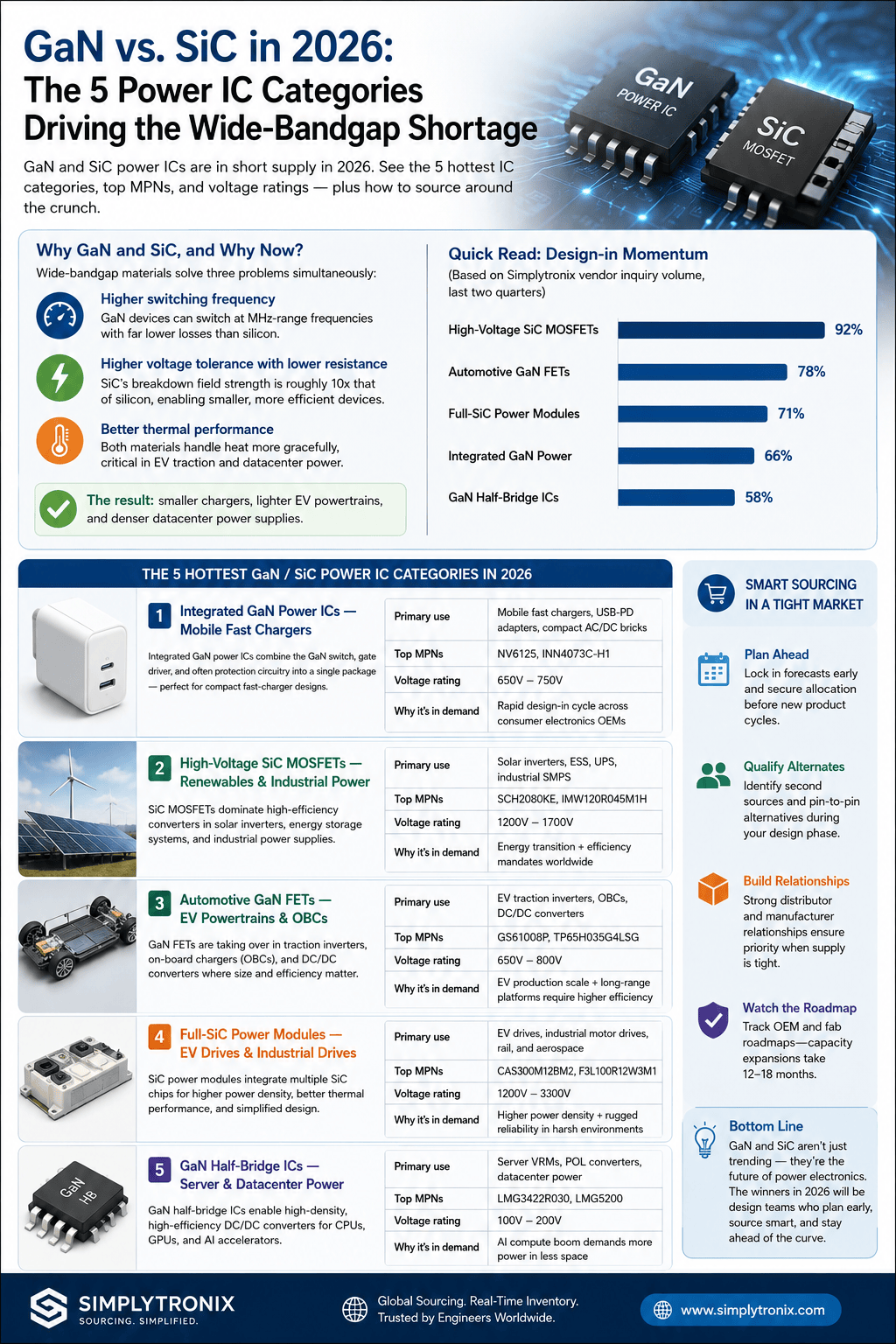
SiC MOSFETs and power modules are increasingly being used in:
- Traction inverters
- On-board chargers (OBC)
- DC-DC converters
- Battery management systems
- Fast charging infrastructure
Compared to silicon-based devices, SiC components can significantly improve drivetrain efficiency. Even small improvements in power conversion efficiency can translate into additional driving range and reduced battery requirements.
For EV manufacturers, the benefits include:
- Longer driving distances per charge
- Reduced battery size requirements
- Faster charging speeds
- Lower vehicle weight
- Improved acceleration and performance
- Reduced thermal management costs
As EV adoption accelerates globally, demand for automotive-grade SiC devices is expected to grow exponentially throughout the forecast period.
Renewable Energy Systems Fueling Demand
The renewable energy sector is another major contributor to the growth of the Power SiC market. Solar farms, wind energy installations, and battery storage systems all require highly efficient power conversion equipment.
Energy generated from renewable sources must be converted, conditioned, and managed before reaching end users. Every stage of this process introduces energy losses.
SiC-based power electronics help minimize these losses by improving conversion efficiency and reducing heat generation.
Applications include:
- Solar inverters
- Wind turbine converters
- Grid-scale energy storage systems
- Microgrid infrastructure
- Smart grid equipment
- High-voltage power conversion systems
With governments investing heavily in renewable energy projects worldwide, the demand for high-performance power semiconductors continues to rise.
Industrial Automation and Smart Manufacturing
Industry 4.0 initiatives are driving substantial investments in industrial automation and advanced manufacturing technologies. Factories are increasingly deploying robotics, automated production systems, and intelligent motor drives to improve productivity and reduce operating costs.
These systems require reliable and efficient power electronics capable of operating continuously under demanding conditions.
SiC semiconductors enable:
- Higher efficiency motor drives
- Smaller power supply systems
- Reduced equipment size
- Improved thermal performance
- Longer operational life
- Lower maintenance requirements
As manufacturing facilities continue to modernize, SiC adoption is expected to accelerate across industrial applications.
Data Centers and AI Infrastructure
The rapid growth of artificial intelligence, cloud computing, and edge computing is increasing power consumption within data centers worldwide.
Operators are under pressure to improve energy efficiency while supporting increasingly demanding computational workloads.
Power conversion losses represent a significant operational expense in large-scale data centers. SiC power devices can improve efficiency across power supply units, uninterruptible power supplies (UPS), and power distribution systems.
For hyperscale data center operators, even minor efficiency improvements can result in substantial cost savings over time.
5G Telecommunications Infrastructure
The rollout of 5G networks requires extensive deployment of power-efficient telecommunications equipment. Base stations, network infrastructure, and edge computing facilities all benefit from higher-efficiency power electronics.
SiC technology enables smaller and more efficient power systems that support the growing demands of next-generation communication networks.
As telecommunications providers continue expanding network coverage and capacity, demand for SiC-based power solutions is expected to increase.
Aerospace and Defense Applications
Aerospace and defense sectors are increasingly adopting Silicon Carbide technology due to its ability to operate reliably under extreme conditions.
Applications include:
- Aircraft power systems
- Satellite electronics
- Military radar systems
- Electronic warfare equipment
- Space exploration technologies
The high reliability and thermal performance of SiC devices make them well-suited for mission-critical applications where failure is not an option.
Market Challenges and Constraints
Despite strong growth projections, several challenges remain.
High Manufacturing Costs
Producing Silicon Carbide wafers remains significantly more expensive than manufacturing traditional silicon wafers. Specialized equipment, complex crystal growth processes, and lower yields contribute to higher production costs.
Limited Wafer Supply
The rapid growth of demand has occasionally outpaced manufacturing capacity. Many semiconductor manufacturers are investing billions of dollars in new facilities to address anticipated supply shortages.
Technical Complexity
Designing with SiC requires specialized engineering expertise. System designers must account for higher switching speeds, electromagnetic interference considerations, and advanced thermal management requirements.
Qualification Requirements
Automotive, aerospace, and industrial customers require extensive reliability testing and certification processes before adopting new semiconductor technologies.
Major Players in the Power SiC Ecosystem
The global SiC market includes several leading semiconductor manufacturers investing aggressively in research, development, and production capacity.
Key participants include:
- Infineon Technologies
- STMicroelectronics
- Wolfspeed
- ON Semiconductor
- ROHM Semiconductor
- Mitsubishi Electric
- Fuji Electric
- Microchip Technology
- Semikron Danfoss
- Toshiba
These companies are expanding wafer production capabilities, introducing new generations of SiC devices, and forming strategic partnerships with automotive and industrial customers.
Supply Chain Considerations for Buyers
As demand for SiC components continues to rise, procurement professionals face increasing challenges in securing reliable supply.
Organizations should consider:
- Diversifying supplier relationships
- Monitoring lead times closely
- Forecasting future demand accurately
- Building strategic inventory reserves
- Partnering with experienced component sourcing specialists
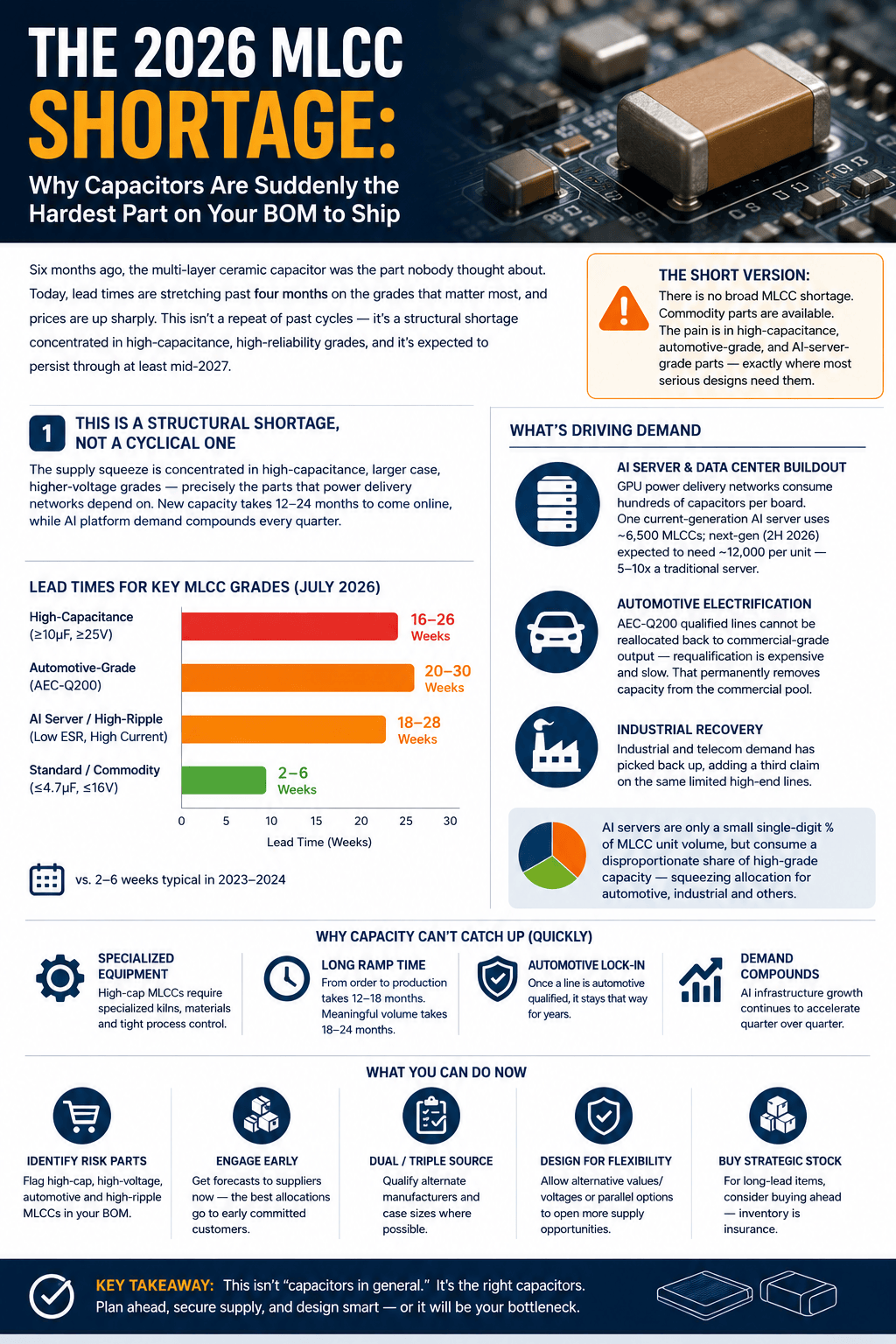
Given the ongoing capacity expansion efforts across the industry, supply conditions are expected to improve over the coming years. However, demand growth may continue to create temporary shortages in specific product categories.
What This Means for Electronics Manufacturers
The transition toward Silicon Carbide represents one of the most significant technological shifts in power electronics since the widespread adoption of silicon power semiconductors decades ago.
Manufacturers that embrace SiC technology can benefit from:
- Higher system efficiency
- Reduced product size and weight
- Improved reliability
- Lower operating costs
- Enhanced market competitiveness
- Better compliance with energy regulations
As customers increasingly prioritize efficiency and sustainability, products utilizing SiC technology are likely to gain competitive advantages across multiple industries.
Future Outlook Through 2031
The outlook for the Power Silicon Carbide market remains exceptionally strong. The convergence of electric mobility, renewable energy expansion, industrial digitization, artificial intelligence infrastructure, and global sustainability initiatives creates a favorable environment for long-term growth.
Continued investments in manufacturing capacity, wafer technology improvements, and economies of scale are expected to gradually reduce costs and expand adoption into additional markets.
By 2031, Silicon Carbide is expected to become a mainstream technology across many power electronics applications, fundamentally reshaping how energy is converted, managed, and utilized worldwide.
Conclusion
The projected growth of the Power SiC market from 2025 to 2031 highlights the increasing importance of wide-bandgap semiconductor technologies in the global electronics industry. With an expected market value of $11 billion and a CAGR of approximately 20%, Silicon Carbide is poised to become a cornerstone of next-generation power systems.
From electric vehicles and renewable energy systems to industrial automation and AI data centers, SiC semiconductors are enabling higher efficiency, greater performance, and more sustainable operations.
For OEMs, EMS providers, sourcing managers, and procurement teams, staying ahead of SiC market developments will be essential for maintaining competitiveness in an increasingly electrified world.
Need help sourcing Silicon Carbide MOSFETs, power modules, IGBTs, or hard-to-find semiconductor components?
Simplytronix specializes in global electronic component sourcing, helping OEMs and EMS companies secure reliable semiconductor supply from trusted manufacturers and authorized distribution channels. Contact our team today for competitive quotations and sourcing support.