Published July 22, 2026 · 11 min read
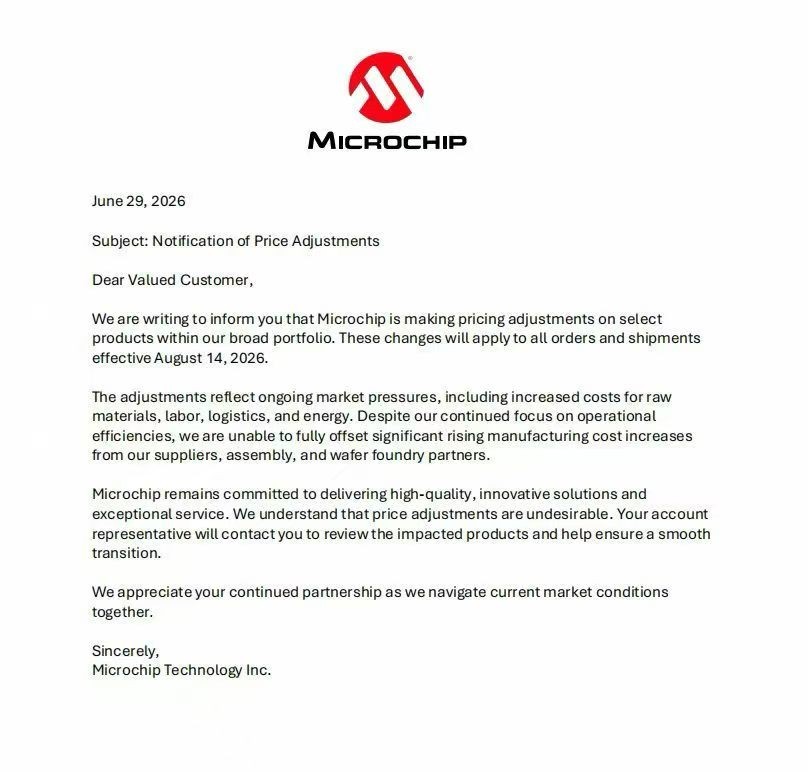
On June 29, 2026, Microchip Technology sent a short, formal letter to its customers. The subject line read "Notification of Price Adjustments." The message was familiar to anyone who has bought electronic components in the last five years: prices on select products across Microchip's portfolio are going up, effective August 14, 2026, because of "ongoing market pressures, including increased costs for raw materials, labor, logistics, and energy."
On its own, a single price letter from a single supplier isn't news. Microchip, ST, TI, NXP, Infineon, and Renesas have all sent some version of this letter at some point in the last five years. What makes this one worth stopping on is the pattern it belongs to. Component pricing since 2021 hasn't moved in one direction — it's been a five-year rollercoaster of shortage, glut, correction, and now a fresh round of increases. Understanding that cycle is the difference between reacting to every price letter in a panic and actually planning your BOM costs around where the market is heading.
This post walks through what's actually happened to component pricing since 2021, why Microchip's August 2026 adjustment fits (or doesn't fit) that pattern, and what it means if you're sourcing, designing, or building around Microchip parts right now.
1. The Notice Itself: What Microchip Actually Said
Stripped of the corporate language, Microchip's June 29 letter makes three points:
- The price adjustment applies to select products within its "broad portfolio" — not a blanket increase across every part number.
- It takes effect on all orders and shipments from August 14, 2026 onward, meaning open POs and forward-dated orders could be affected depending on how your account is structured.
- The stated drivers are cost increases at the supplier, assembly, and wafer foundry level — in other words, this is being framed as a cost-pass-through, not a demand-driven price grab.
Microchip isn't sourcing-on-demand or naming affected part numbers publicly, and the letter leaves the specifics to account representatives, which is standard practice for a distributor-and-OEM-facing notice like this. If you buy Microchip parts directly or through a distributor, the real impact only becomes clear once you see it applied to a specific quote or order.
2. Zooming Out: The Five-Year Price Story (2021–2026)
To understand whether this is a big deal or a routine adjustment, it helps to walk through what component pricing has actually done since 2021.
2021–2022: The Shortage Era
The starting point for almost any conversation about component pricing over the last five years is the global chip shortage that affected more than 169 industries and led to major price increases, long queues, and reselling among consumers and manufacturers for products ranging from cars to appliances. The causes stacked on top of each other: pandemic-driven shifts in demand, and then a series of physical supply shocks. A severe winter storm in February 2021 forced Samsung, Infineon, and NXP to close plants in Austin, Texas for months, while a fire at a Renesas plant supplying roughly 30% of the global automotive microcontroller market took at least 100 days to recover from. On top of that, a January 2022 fire at an ASML facility in Berlin disrupted production of the lithography equipment used to make chips in the first place. Demand didn't cooperate either. Automakers were caught flat-footed after cutting chip orders early in the pandemic, then scrambling to rebuy just as consumer electronics demand spiked. The result, on the automotive side alone, was brutal: new car inventories collapsed, pushing the average new car price in the U.S. to roughly $42,700 and used car prices to around $25,500 by mid-2021, with major suppliers like Toyota, GM, Ford, and Nissan idling plants well into the following year.
Through 2021 and into 2022, lead times on many analog and microcontroller parts — the categories Microchip lives in — stretched from weeks to well over a year in extreme cases. Distributors and brokers saw allocation pricing on hot part numbers run multiples above list price.
2022–2023: Peak Pricing, Then the Turn
2022 was the peak of the cycle. Industry-wide semiconductor revenue was projected to hit around $676 billion for the year, a 13.6% jump over 2021, and memory pricing in particular kept climbing — Micron's own guidance in early 2022 pointed to double-digit percentage price increases for memory chips through the rest of that fiscal year, driven partly by supply chain strain that was compounded by Russia's invasion of Ukraine disrupting the neon gas supply used in chip manufacturing. But by late 2022 and through 2023, the cycle flipped hard. End demand cooled as consumer electronics inventory that had been over-ordered during the shortage started piling up in warehouses. Distributors that had stockpiled parts to protect against allocation found themselves sitting on excess inventory. Lead times collapsed almost as fast as they'd expanded, and list prices on many general-purpose analog and MCU parts softened or held flat as manufacturers tried to move inventory rather than raise prices further.
2023–2025: The Long Correction
This was the inventory digestion period. Microchip itself lived through this directly — its own fiscal 2026 first-quarter results, reported mid-2025, still showed the scars of the correction: net sales of $1.0755 billion, up 10.8% sequentially but still down 13.4% year-over-year, alongside a GAAP net loss of $46.4 million. The company was actively working through the glut on its own books, too — cutting distribution inventory down to 29 days and reducing inventory by $124.4 million in that quarter alone. That's not the balance sheet of a company that's been raising prices freely; it's one that spent much of 2023–2025 clearing out excess stock and rebuilding order flow. By late 2025, analysts were describing customers as still cautious about restocking, even as backlog and bookings pointed toward a rebound heading into 2026. For buyers, this multi-year stretch was the opposite of 2021: parts were easier to get, lead times were reasonable again, and pricing pressure from suppliers largely disappeared. If you were building BOMs in this window, component cost wasn't the thing keeping you up at night.
2026: A New Upward Cycle
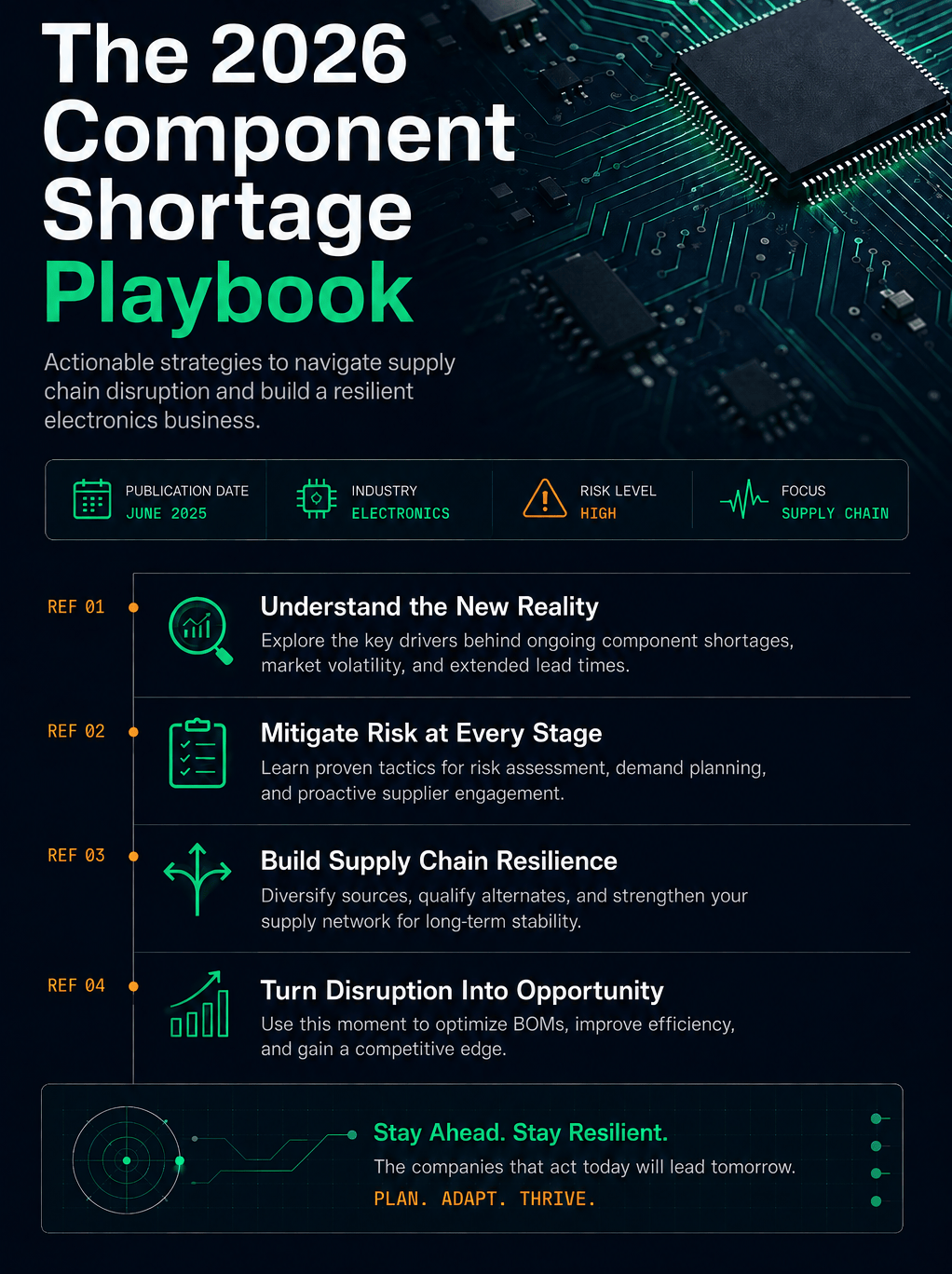
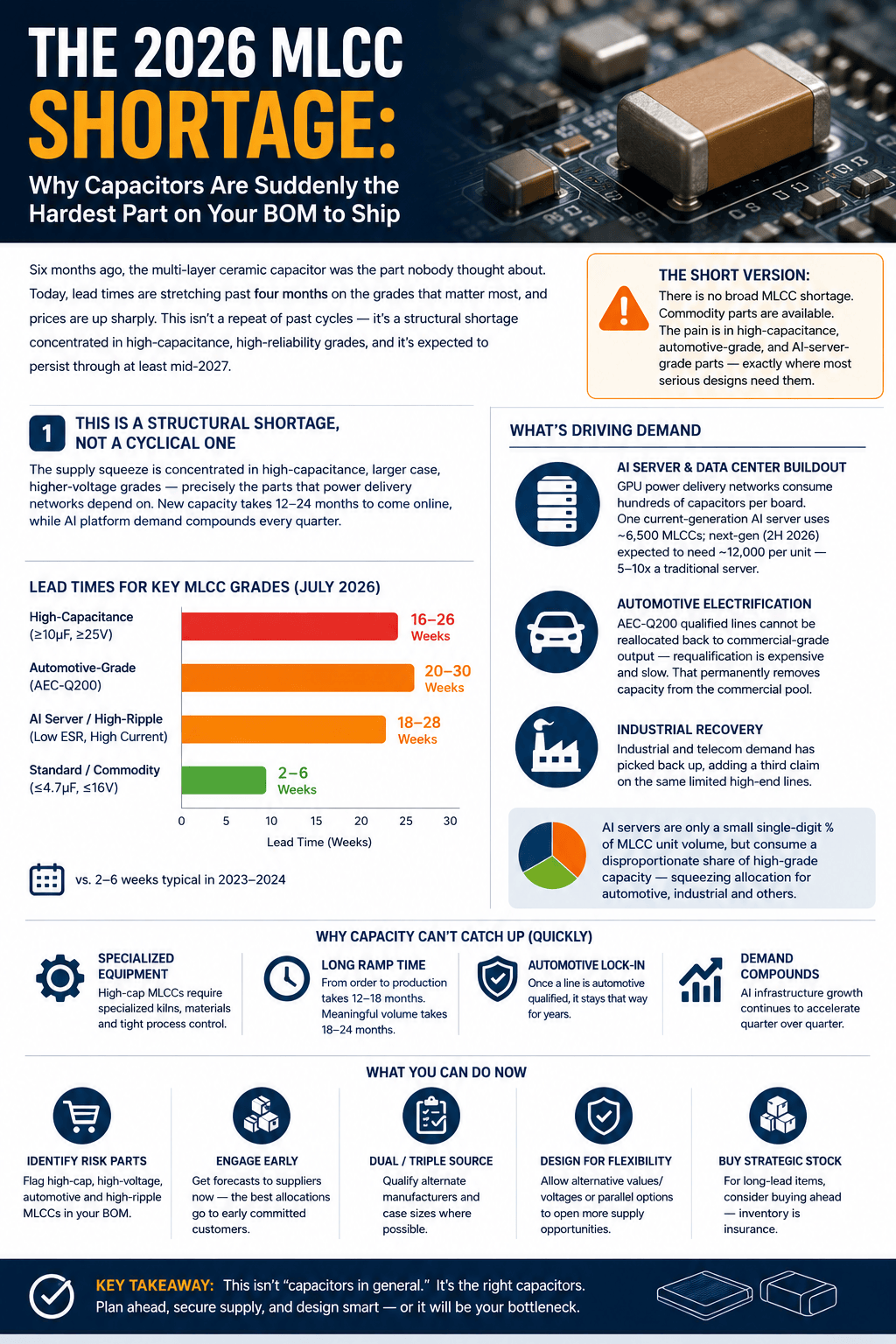
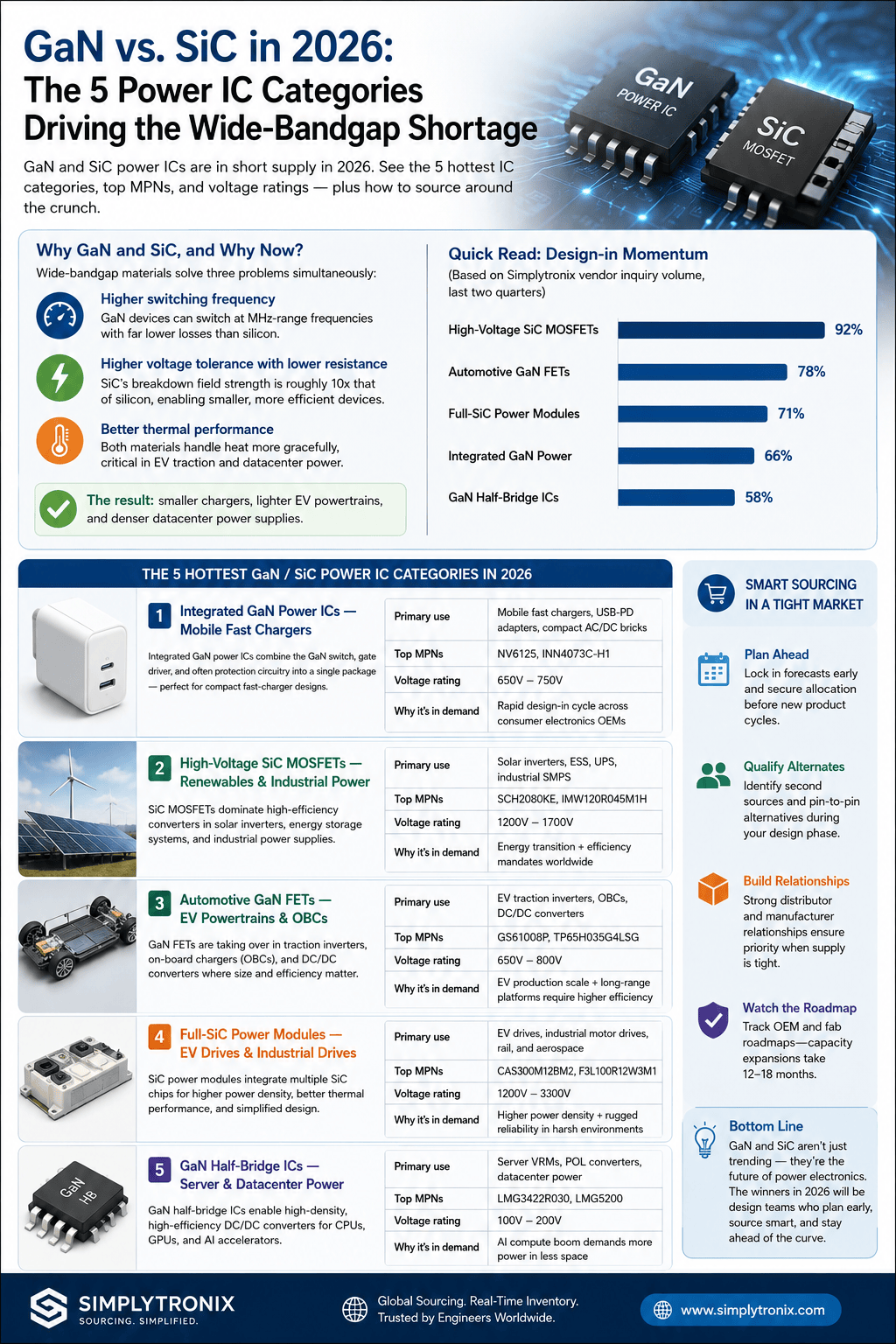
That relative calm is what makes the current moment different. Microchip's August 2026 letter isn't happening in isolation. STMicroelectronics, NXP Semiconductors, Texas Instruments, and Infineon Technologies have all notified customers of their own price adjustments taking effect around June and July 2026, and Renesas has separately announced a price adjustment starting in July 2026 as well. That's five of the largest analog, MCU, and power semiconductor suppliers in the world moving on pricing within weeks of each other. The drivers being cited are consistent across all of them: higher material, energy, labor, logistics, and supplier operating costs, layered on top of continued strong demand from automotive, industrial, power semiconductor, and AI infrastructure markets. It's worth noting this is a cost-push story more than a shortage-driven one — unlike 2021, there's no single fire or freak storm behind it. It's a slower-moving, broader repricing across the industry's cost base. Memory has its own, more extreme version of this story running in parallel. Micron's stock surged 262% in 2025 on the back of a memory chip shortage as AI server demand consumed manufacturing capacity, and Samsung's co-CEO described the resulting supply crunch as "unprecedented," with production increasingly shifting toward high-bandwidth AI memory at the expense of supply for smartphones and consumer electronics. Memory and general-purpose logic/analog are different markets, but they share a root cause: fabs and assembly capacity are finite, and AI infrastructure demand is now competing directly with the automotive, industrial, and consumer electronics demand that companies like Microchip primarily serve.
3. Reading Between the Lines of Microchip's Own Numbers
Microchip's recent financial trajectory helps explain the timing. The company was projecting around $1.130 billion in net sales for its fiscal Q2 2026, roughly 5.1% sequential growth, and July bookings had reached their highest level since July 2022, with backlog exceeding prior-quarter levels — both signs that demand was firming up after the long correction. Wall Street noticed: Piper Sandler raised its price target on Microchip from $65 to $80 following strong quarterly results and guidance, citing broad strength across nearly all of Microchip's product lines and geographies, and JP Morgan maintained an Overweight rating with a $77 price target, pointing to improving fundamentals even as customers remained cautious on restocking. Put simply: demand is recovering, backlog is rebuilding, and input costs are rising at the same time. That combination is exactly when a supplier moves on price — not during a shortage panic, and not during an inventory glut, but in the window where recovering demand gives them the pricing power to pass rising costs through without losing orders.
4. What This Means If You Buy or Design Around Microchip Parts
A few practical takeaways, especially if you're sourcing components for production rather than just watching the headlines:
It's selective, not universal
Microchip's letter explicitly says "select products," and the same is true of most manufacturer price letters. Automotive-qualified, power, and long-lifecycle industrial parts tend to see adjustments before high-volume consumer parts. Don't assume every part number on your BOM is affected until you've checked.
Quote validity windows matter more now
When multiple major suppliers move on pricing within the same quarter, quotes that were valid 60 or 90 days ago may no longer reflect current cost. If you're locking in pricing for a production run, get updated quotes rather than relying on older ones, especially for anything shipping after August 14, 2026.
Lead time and price are connected again
They're not moving in lockstep the way they did in 2021, but rising demand and cost pressure together are a signal to watch lead times as closely as price on parts you depend on for production.
This is an industry-wide cycle, not a single-vendor decision
Because ST, NXP, TI, Infineon, and Renesas are all adjusting pricing in the same window, second-sourcing to a "cheaper" alternative supplier may not actually protect your BOM cost the way it would have in a single-vendor price increase. It's worth evaluating cross-vendor alternatives on total cost and availability, not price alone.
Talk to your account rep or distributor before the effective date
Microchip's letter notes that account representatives will reach out to review impacted products. If you have production volume at stake, don't wait for that outreach — get ahead of it and confirm which of your active part numbers are affected before August 14.
5. The Bigger Picture
Five years on from the start of the 2021 shortage, component pricing has come full circle in a sense — not back to shortage-era chaos, but into a new phase where costs are rising again after two years of correction. The difference this time is that it's being driven by structural cost pressure and AI-driven demand competition rather than a single supply shock. That likely makes it a slower, more sustained trend rather than a short-lived spike. For buyers, the lesson from the last five years is the same one that applies now: don't treat a price letter as a one-off. Treat it as a signal to check your BOM, confirm your quotes, and understand where your specific part numbers sit in the broader industry cycle before you're forced to react to it.
Simplytronix sources electronic components on demand from a global vendor network, with no held inventory to mark up. If you're trying to figure out how the 2026 pricing wave affects a specific Microchip part number or BOM, reach out and we'll help you sort it out.