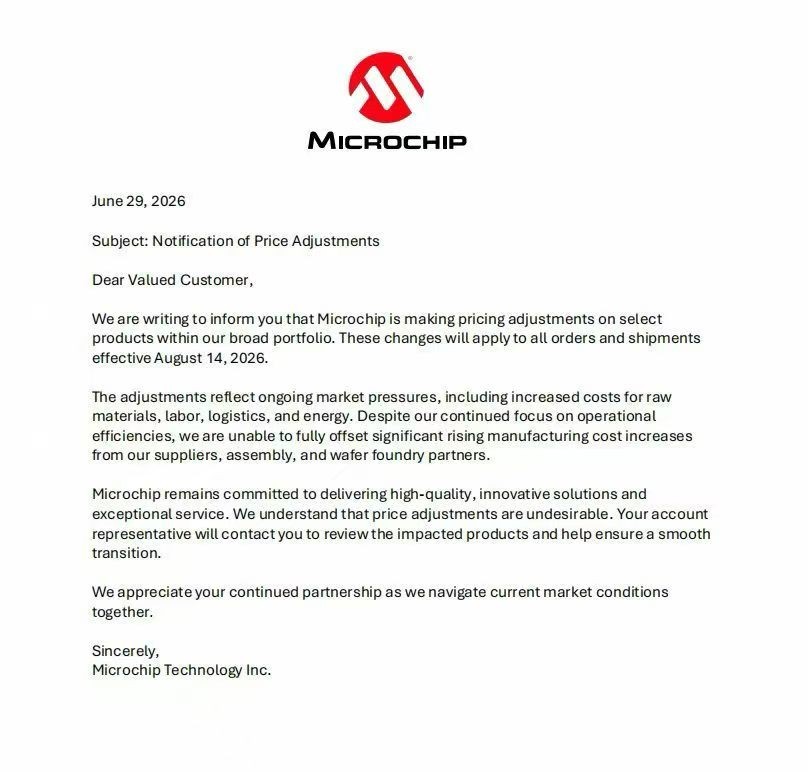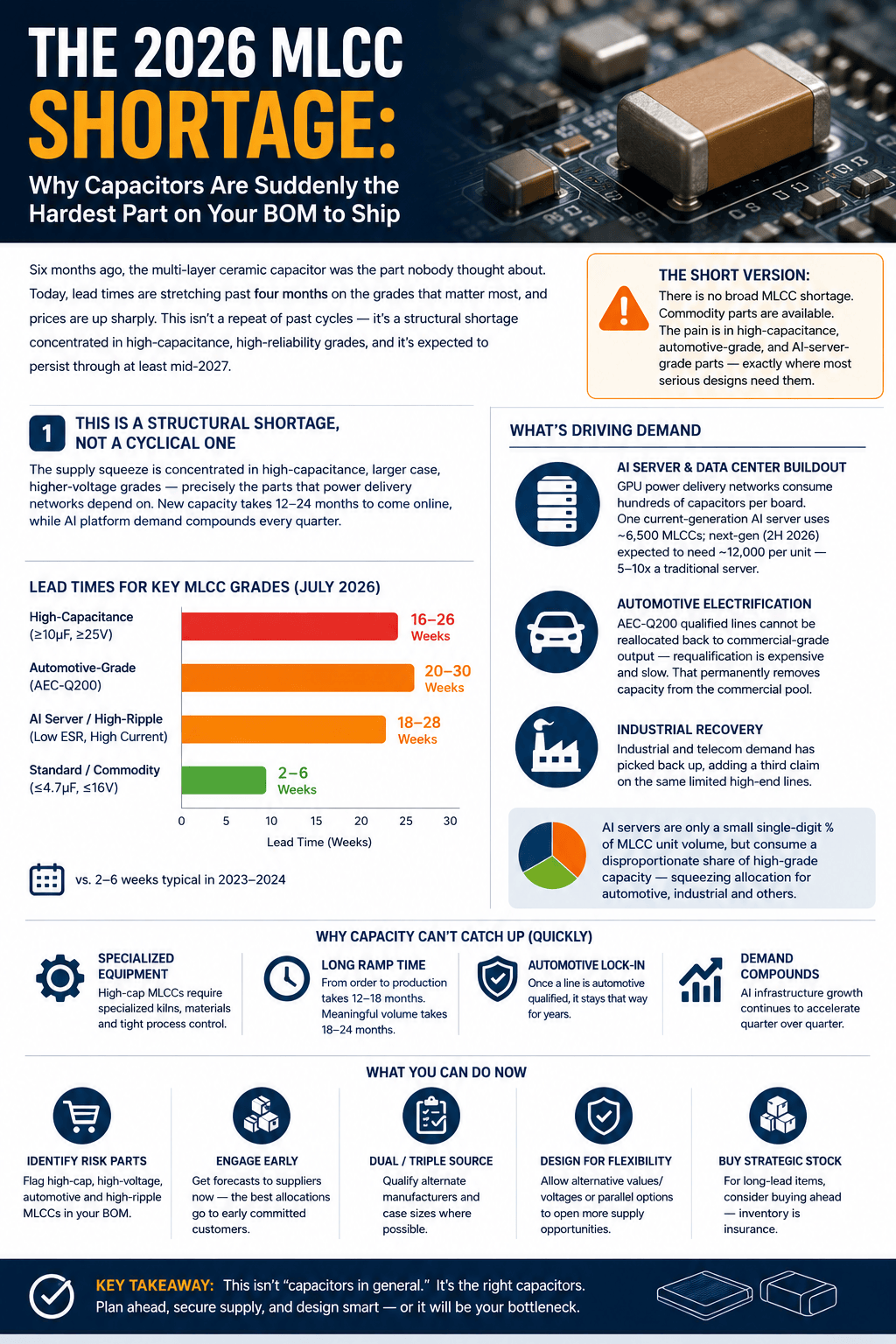
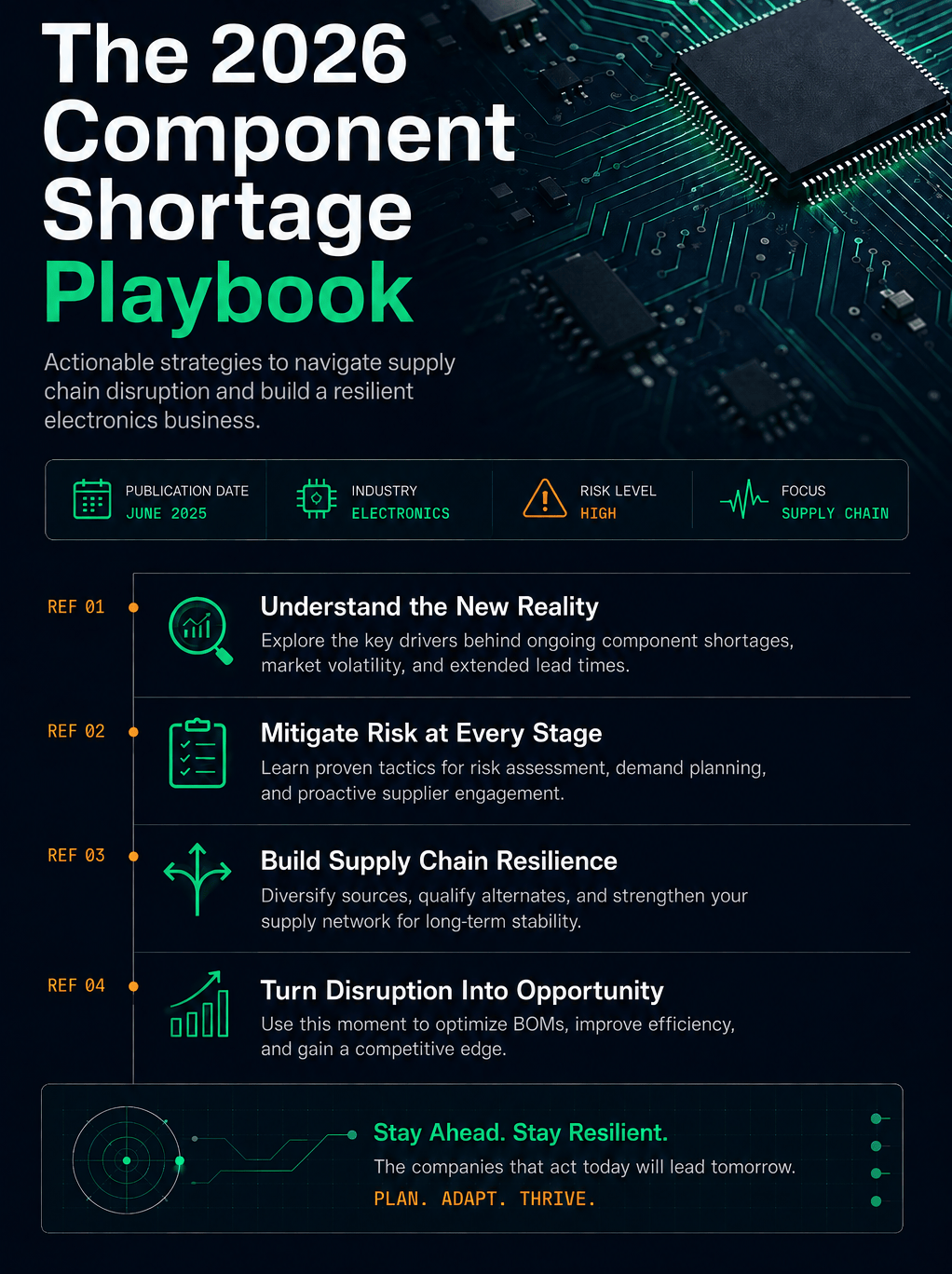
Every few years the industry relearns the same lesson: a component shortage doesn't announce itself with a memo. It shows up as a "please confirm lead time" email that comes back with a number three times longer than last quarter — for a part that's been boringly available for a decade.
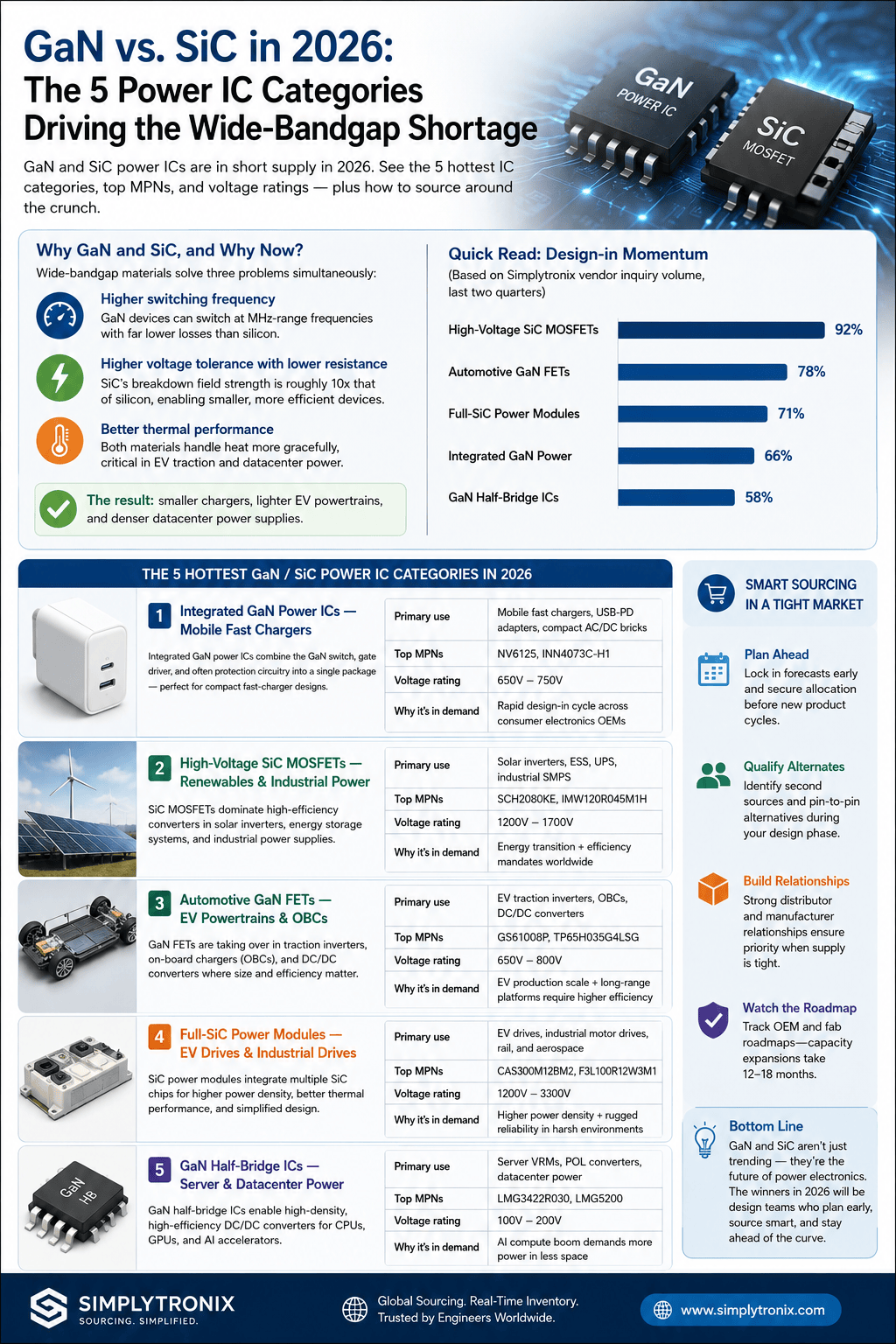
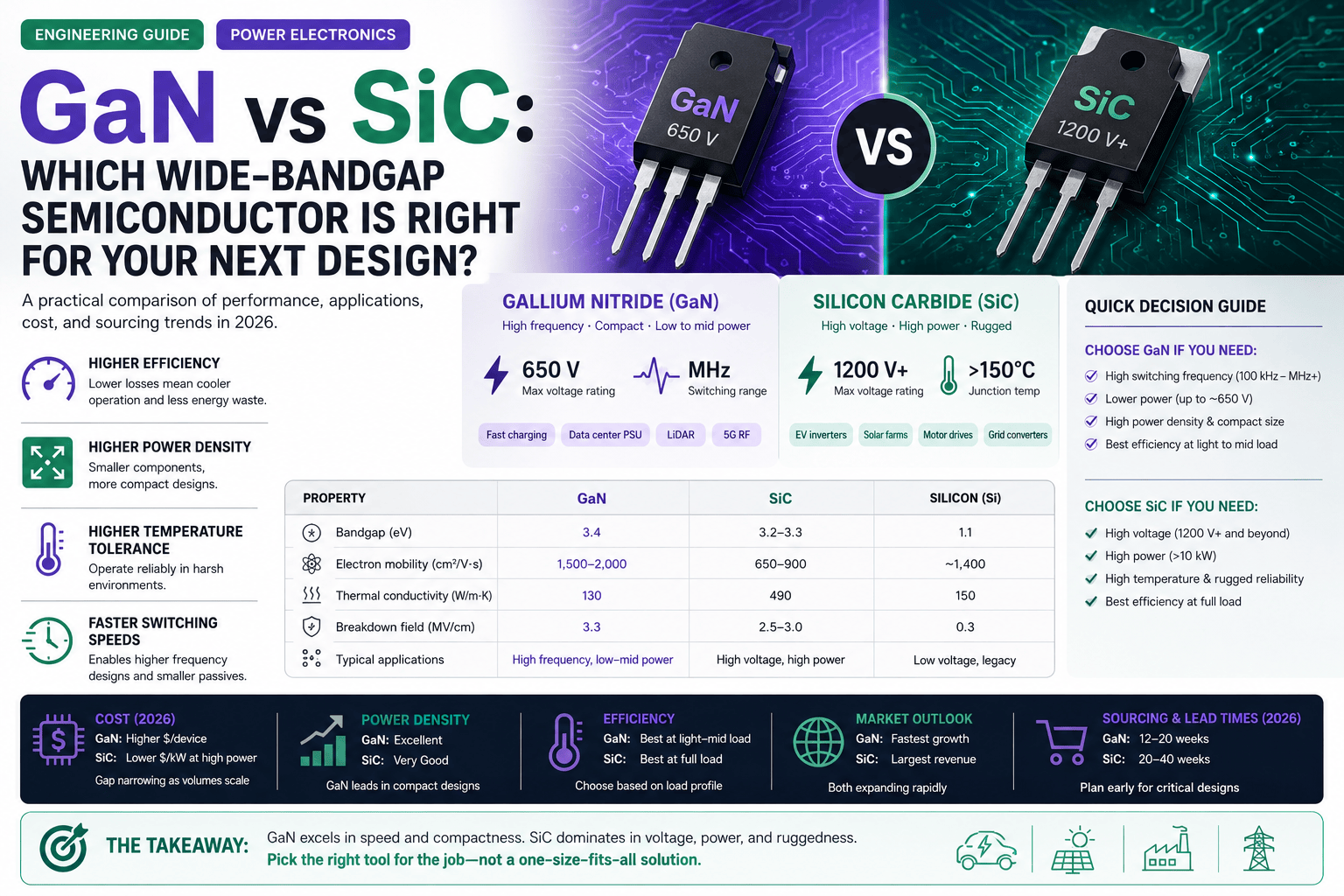
Right now that pattern is repeating across a specific set of categories: SiC and IGBT power devices feeding EV and solar inverters, automotive-grade MCUs, PMICs tied to those MCUs, and DDR5/LPDDR5 memory pulled tight by the data-center buildout. None of these are exotic parts. That's exactly why the shortage is dangerous — teams built their BOMs assuming they'd always be a commodity.
Why lead times are stretching again
Three forces are compounding at once. Fabs allocate capacity toward the highest-margin, highest-volume customers first, which means smaller production runs feel the squeeze earliest and hardest. Distributors are holding tighter safety stock after the last shortage cycle, which reduces the spot inventory that used to absorb sudden demand spikes. And design cycles for EV power stages and edge-AI hardware are pulling the same power semis and memory parts that consumer electronics also depends on — two demand curves competing for one wafer allocation.
The result isn't a clean, industry-wide shortage. It's patchy: a part number that's in stock today can go to a 40-week lead time after one large OEM places a blanket order. That volatility is the actual problem, more than the shortage itself.
The real cost of a stockout isn't the part price
When a line goes down over a $0.40 PMIC, the part cost is irrelevant. What actually shows up on the P&L is idle labor, missed customer ship dates, and — often the most expensive line item — an emergency broker purchase at a 5-10x markup with no traceability on the parts' origin.
Teams that treat sourcing as a purely reactive function (quote when the line runs out) consistently pay more per unit over a 12-month window than teams that run a standing risk review — even though the reactive team "never pays for stock they don't need." Idle time and expedite premiums eat the savings many times over.
Build a BOM that degrades gracefully
The goal isn't to predict which part goes EOL next — nobody does that reliably. The goal is a BOM that doesn't fail catastrophically when one line item does.
1. Flag single-source risk at design time, not at order time
Any line with one approved manufacturer and one approved package should be visible on the BOM itself, not buried in an engineer's memory. A simple risk column — Single Source / Dual Source / Form-Fit-Function Alternate Qualified — turns a design review into a sourcing review for free.
2. Separate "hard to get" from "gone forever"
Allocation and true end-of-life look identical from the ordering desk but need opposite responses. Allocation is a scheduling problem — solved with lead-time buffering, blanket POs, or split sourcing across regions. True EOL is a design problem — it needs a qualified drop-in or a redesign, and starting that process the week you find out is already late.
| Signal | Allocation (temporary) | End-of-Life (permanent) |
|---|---|---|
| Lead time | Stretches, then recovers over 2-4 quarters | Stretches, then the part disappears from the manufacturer's site |
| Manufacturer signal | "Allocated" status, no PCN issued | Product Change Notice (PCN) with last-time-buy date |
| Distributor stock | Zero now, restock dates listed | Zero now, no restock date, price climbing on remaining lots |
| Right response | Buffer, split-source, wait it out | Qualify an alternate or redesign the footprint |
3. Keep a pre-qualified alternates list, not just a preferred-parts list
A preferred-parts list tells engineering what to design in. An alternates list tells procurement what's already been electrically and mechanically validated as a substitute, so a shortage doesn't turn into a six-week qualification project under deadline pressure.
Where sourcing decisions go wrong under pressure
The most common failure mode isn't buying from a bad source — it's buying from an unverified one, fast, because the alternative felt worse. A few checks catch most of the risk before a PO is cut:
- Traceability first. Every lot should be traceable to an authorized channel or a documented chain of custody — not just "we've bought from them before."
- Date codes and packaging match the datasheet era. Mismatched date codes or repainted markings are the single biggest red flag on allocation-tight parts.
- Get the test report before the invoice. Incoming inspection and, for critical parts, third-party testing should be non-negotiable when a part is trading well above list price.
- Price spikes are information, not just cost. A part quoted at 8x list price is telling you something about where it's coming from — treat that as a sourcing signal, not only a budget line.
A practical RFQ checklist for constrained parts
When a critical line item goes red, the RFQ you send determines how good the answers you get back will be. A tight RFQ gets a sourcing partner moving in hours instead of days.
Before you send the RFQ
Have a red line item on your BOM right now?
Simplytronix runs sourcing-on-demand across authorized and vetted offshore channels for exactly this situation — EOL parts, allocation-constrained MCUs and power semis, and DDR5/LPDDR5 memory. No held inventory markup, no minimum order games. Send the MPN and quantity, get a real answer.
Request a Quote →