How Voltage Regulators Work: A Practical Guide for Modern Electronics
Voltage regulators are essential components in electronic systems, ensuring a stable output voltage regardless of input fluctuations or load changes. From smartphones to industrial equipment, regulators protect circuits and improve reliability.
This guide explains how voltage regulators work, compares linear and switching types, and helps you choose the right solution for your application.
1. What is a Voltage Regulator?
A voltage regulator is an electronic component or circuit that maintains a constant output voltage despite variations in input voltage or load conditions.
- Stabilizes power supply
- Prevents damage to sensitive components
- Improves system efficiency and lifespan
2. Basic Working Principle
Voltage regulators operate using a feedback control mechanism. They continuously monitor the output voltage and adjust the internal circuitry to maintain a steady level.
- Compare output voltage with reference voltage
- Detect error (difference)
- Adjust current flow to correct output
This closed-loop system ensures stable voltage even when conditions change.
3. Linear Voltage Regulators
Linear regulators control voltage by dissipating excess energy as heat. They are simple, low-noise, and widely used in low-power applications.
| Feature | Linear Regulator |
|---|---|
| Efficiency | Low (30–60%) |
| Noise | Very low |
| Complexity | Simple design |
| Heat generation | High |
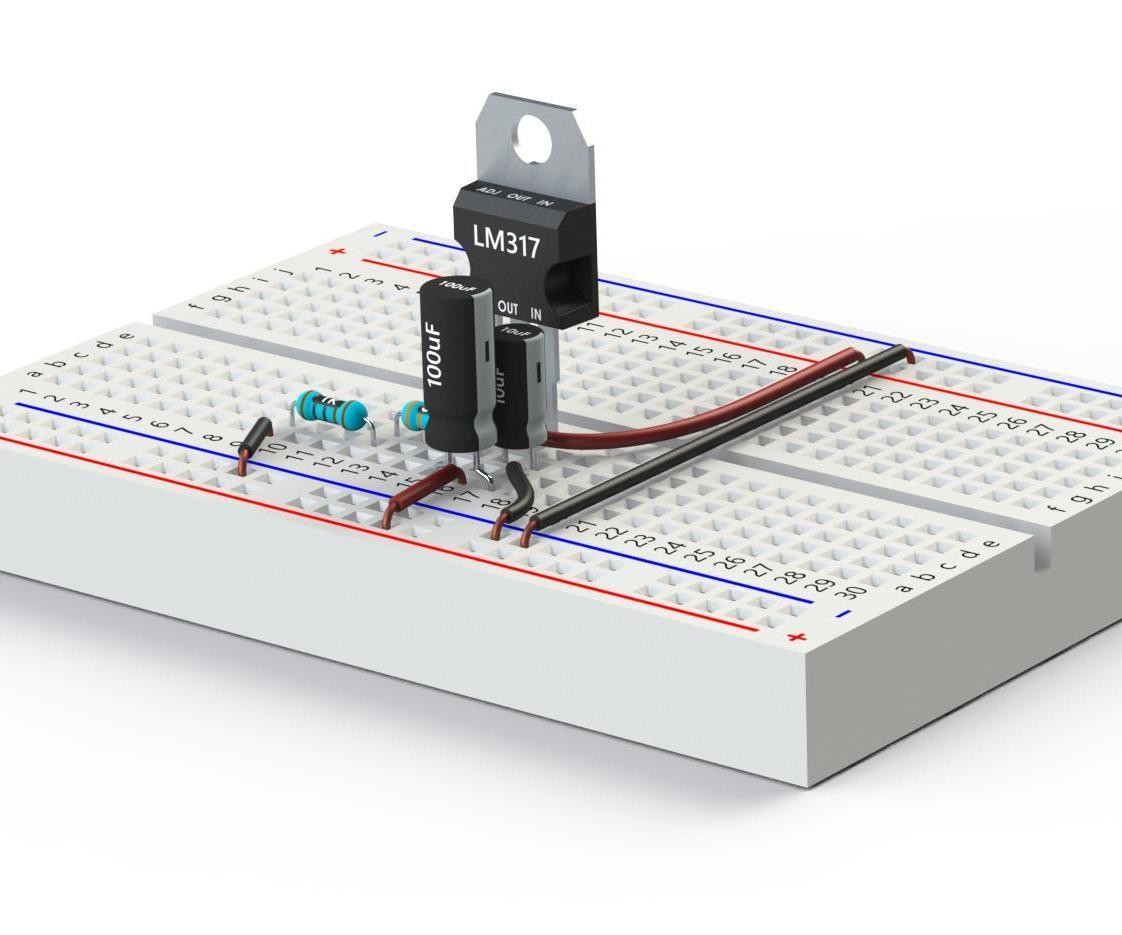
Common examples include 7805 and LM317 regulators used in basic circuits.
4. Switching Voltage Regulators
Switching regulators use high-frequency switching and energy storage components like inductors and capacitors to efficiently convert voltage.
| Feature | Switching Regulator |
|---|---|
| Efficiency | High (80–95%) |
| Noise | Higher (switching ripple) |
| Complexity | More complex |
| Heat generation | Low |
Types include:
- Buck (step-down)
- Boost (step-up)
- Buck-boost
5. Linear vs Switching: Key Differences
| Parameter | Linear | Switching |
|---|---|---|
| Efficiency | Low | High |
| Cost | Low | Moderate |
| Size | Small | Larger (due to inductors) |
| Best Use | Low noise circuits | Power-efficient systems |
6. Applications
- Consumer Electronics: Smartphones, laptops
- Automotive: ECU power management
- Industrial: PLCs and control systems
- IoT Devices: Battery-powered systems
7. How to Choose the Right Voltage Regulator
When selecting a regulator, consider:
- Input and output voltage range
- Current requirements
- Efficiency vs noise trade-off
- Thermal management
- Application type
8. Pricing Trends (2025–2026)
| Category | YoY Price Trend | Reason |
|---|---|---|
| Linear regulators | +3% to +8% | Stable demand |
| Switching regulators | +5% to +15% | High efficiency demand |
| Power ICs | +8% to +18% | Integration & node cost |
Conclusion
Voltage regulators are fundamental to modern electronics, ensuring stable operation and protecting components from voltage fluctuations. Understanding the differences between linear and switching regulators helps engineers design efficient and reliable systems.
Need reliable voltage regulator ICs for your next project?
Simplytronix offers verified sourcing, competitive pricing, and fast delivery across a wide range of power management components.
Contact us today to optimize your power design and supply chain.