How Semiconductors Are Powering the Future of EV Charging Infrastructure
The global transition toward electric mobility is rapidly reshaping the transportation landscape. Governments, industries, and consumers are increasingly adopting electric vehicles (EVs) to reduce emissions, improve energy efficiency, and support sustainable development goals. However, the widespread adoption of electric vehicles depends not only on vehicle technology but also on the development of reliable, scalable, and intelligent charging infrastructure.
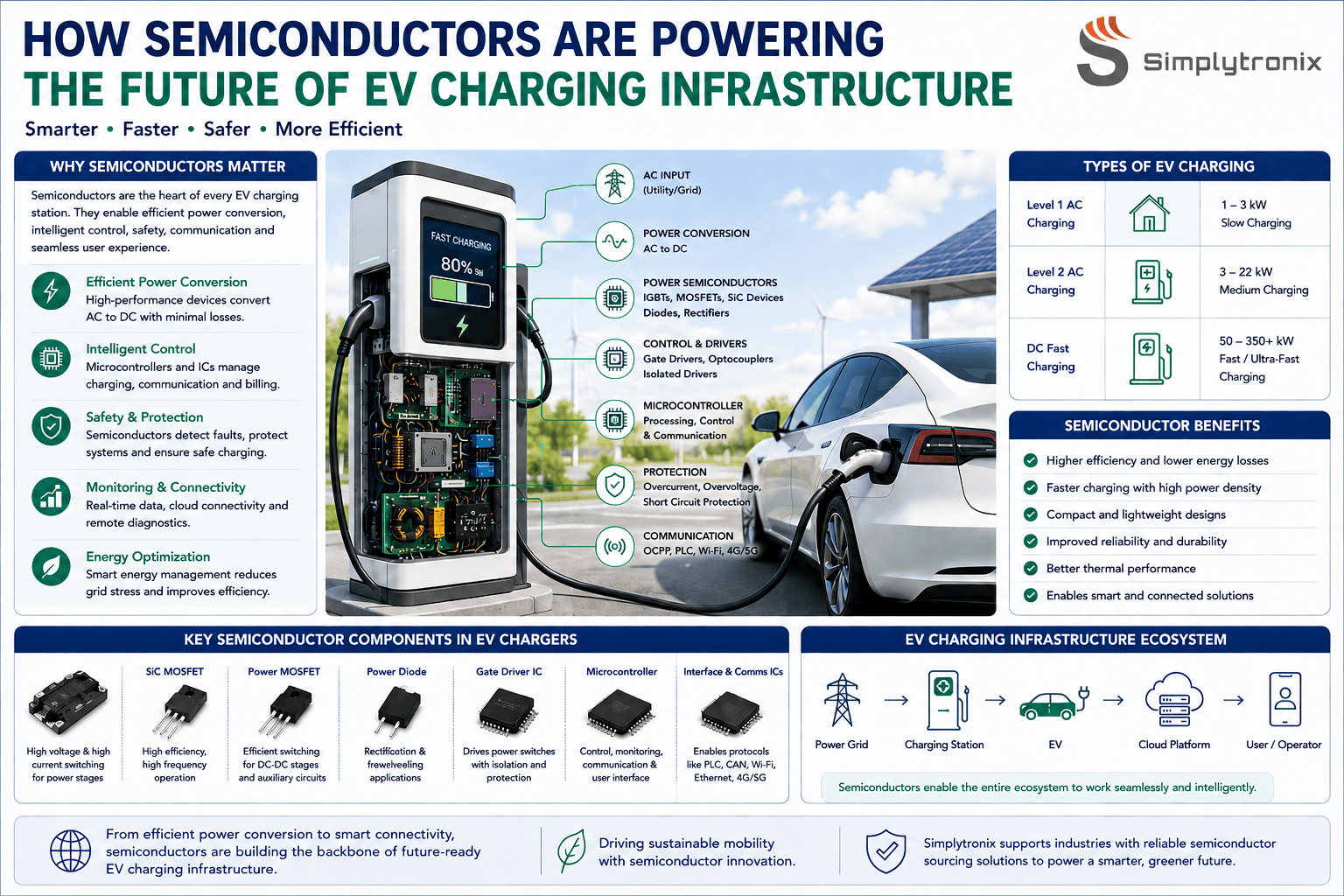
Behind every modern EV charging station lies a complex ecosystem of semiconductor technologies responsible for power conversion, charging control, communication, protection, monitoring, and energy management. Semiconductors are the invisible foundation that enables EV charging systems to operate efficiently, safely, and intelligently.
At Simplytronix, we recognize the growing importance of advanced semiconductor technologies in supporting next-generation energy infrastructure and addressing the challenges associated with global component supply chains.
The Growing Demand for EV Charging Infrastructure
The rapid increase in electric vehicle adoption worldwide has created an urgent demand for charging infrastructure capable of supporting millions of vehicles. Traditional fuel stations were designed around liquid fuel distribution, while EV ecosystems require intelligent electronic systems capable of handling significant electrical loads.
Modern charging networks must provide:
- Fast charging capability
- High power efficiency
- Reliable operation
- Grid integration
- Real-time monitoring
- Smart communication systems
- Safety and protection mechanisms
Semiconductors enable all these functions through highly integrated power and control devices.
Why Semiconductors Are Critical in EV Charging Systems
Electric vehicle charging systems involve much more than delivering electricity from the power grid to a battery. Power must be converted, regulated, monitored, protected, and optimized continuously during charging operations.
| Charging Function | Role of Semiconductor Devices |
|---|---|
| Power Conversion | Converts AC power into DC power efficiently |
| Voltage Regulation | Controls charging voltage levels |
| Current Management | Regulates charging current |
| Protection Systems | Prevents faults and overload conditions |
| Communication | Supports smart charging protocols |
| Monitoring Systems | Tracks system performance and diagnostics |
Power Semiconductors in EV Chargers
Power semiconductor devices are among the most critical components inside charging systems. They act as electronic switches capable of handling high voltages and currents while minimizing energy losses.
Common power semiconductor devices used in EV charging infrastructure include:
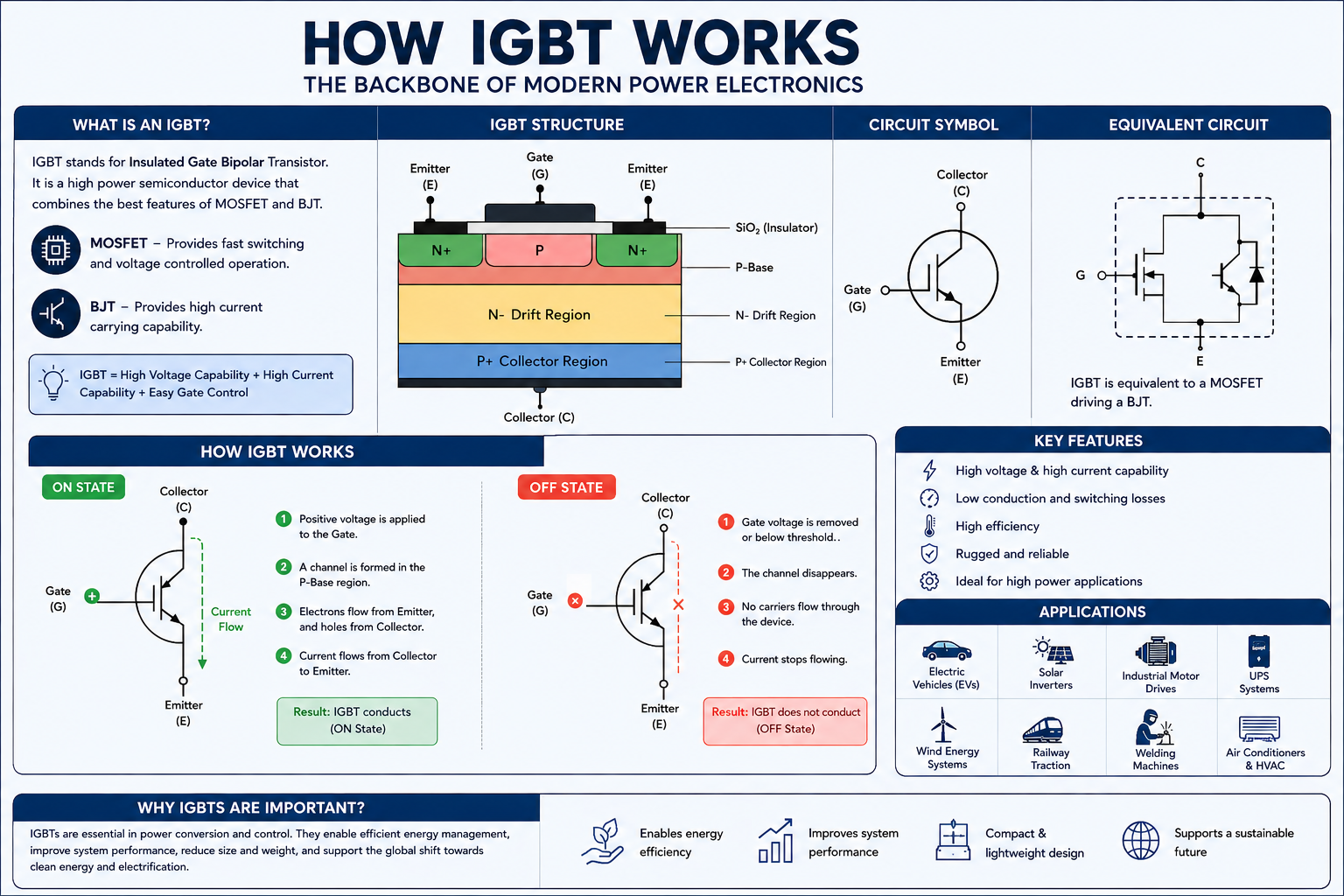
- IGBTs (Insulated Gate Bipolar Transistors)
- Power MOSFETs
- Silicon Carbide (SiC) MOSFETs
- Power Diodes
- Rectifiers
- Gate driver ICs
| Semiconductor Device | Primary Function | Typical Application |
|---|---|---|
| IGBT | High-power switching | Fast charging stations |
| MOSFET | High-speed switching | Low and medium power systems |
| Silicon Carbide MOSFET | Ultra-efficient switching | Ultra-fast charging systems |
| Power Diodes | Current rectification | Power conversion circuits |
Semiconductors in AC and DC Fast Charging
Different charging systems require different semiconductor architectures.
AC chargers typically rely on onboard vehicle converters, while DC fast charging systems perform power conversion externally and deliver direct current directly to vehicle batteries.
| Charging Type | Power Range | Semiconductor Complexity |
|---|---|---|
| Level 1 AC Charging | 1–3 kW | Low |
| Level 2 AC Charging | 3–22 kW | Medium |
| DC Fast Charging | 50–350+ kW | Very High |
Ultra-fast charging stations require high-performance semiconductor devices because even small efficiency losses can generate significant heat and energy waste.
The Rise of Silicon Carbide in EV Charging
Traditional silicon-based semiconductor devices continue to dominate many applications, but newer materials such as Silicon Carbide (SiC) are becoming increasingly important in EV infrastructure.
Silicon Carbide devices offer several advantages:
- Higher switching frequencies
- Lower power losses
- Higher operating temperatures
- Smaller cooling requirements
- Improved energy efficiency
- Compact system design
These characteristics make SiC technology especially valuable for high-power fast charging systems where efficiency directly affects charging speed and operating cost.
Smart Charging and Semiconductor Intelligence
Modern EV charging systems are becoming increasingly intelligent. Semiconductor technologies now support communication protocols, embedded processing, real-time analytics, and dynamic energy management.
Microcontrollers, processors, memory devices, and communication ICs work together to enable:
- Load balancing
- Remote diagnostics
- Predictive maintenance
- Cloud connectivity
- Payment integration
- Battery health monitoring
- Grid interaction
This level of intelligence transforms charging stations from simple power delivery points into smart energy management systems.
Challenges in Semiconductor Supply Chains for EV Infrastructure
The rapid expansion of electric vehicle ecosystems has significantly increased demand for semiconductor components worldwide. Manufacturers often face challenges including:
- Long component lead times
- Supply shortages
- Counterfeit components
- Limited traceability
- Price fluctuations
Supply chain disruptions can delay charging infrastructure deployment and affect project timelines across industries.
At Simplytronix, we support customers through AI-enabled sourcing methods, supplier validation, and supply chain transparency solutions that help reduce sourcing risks and improve procurement efficiency.
The Future of Semiconductor Technology in EV Charging
As electric vehicle adoption continues growing globally, semiconductor technology will play an increasingly critical role in enabling faster, smarter, and more efficient charging infrastructure.
Future developments may include:
- Higher power density chargers
- Wireless charging systems
- Vehicle-to-grid integration
- AI-driven energy optimization
- Advanced semiconductor materials
- Autonomous charging systems
Conclusion
Semiconductors are the hidden technology driving modern EV charging infrastructure. From power conversion and safety systems to communication and intelligent energy management, these components make efficient electric mobility possible.
As charging networks continue expanding worldwide, semiconductor innovation and reliable sourcing strategies will remain essential for building the next generation of sustainable transportation systems.
Simplytronix continues supporting industries with intelligent semiconductor sourcing solutions designed to improve reliability, reduce supply chain risks, and enable future technology adoption.